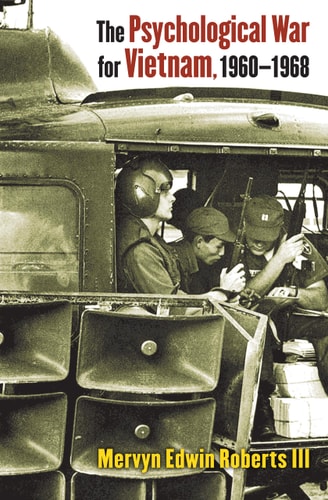
The Psychological War for Vietnam, 1960–1968
0
0
As an Amazon Associate and affiliate partner, Menrva Books earns from qualifying purchases. Learn more
Author Description
The Psychological War for Vietnam, 1960–1968, for the first time fully explores the most sustained, intensive use of psychological operations (PSYOP) in American history. In PSYOP, US military personnel use a variety of tactics—mostly audio and visual messages—to influence individuals and groups to behave in ways that favor US objectives. Informed by the author’s firsthand experience of such operations elsewhere, this account of the battle for “hearts and minds” in Vietnam offers rare insight into the art and science of propaganda as a military tool in the twentieth century. The Psychological War for Vietnam, 1960–1968, focuses on the creation, capabilities, and performance of the forces that conducted PSYOP in Vietnam, including the Joint US Public Affairs Office and the 4th PSYOP Group. In his comprehensive account, Mervyn Edwin Roberts III covers psychological operations across the entire theater, by all involved US agencies. His book reveals the complex interplay of these activities within the wider context of Vietnam and the Cold War propaganda battle being fought by the United States at the same time. Because PSYOP never occurs in a vacuum, Roberts considers the shifting influence of alternative sources of information—especially from the governments of North and South Vietnam, but also from Australia, Korea, and the Philippines. The Psychological War for Vietnam, 1960–1968, also addresses the development of PSYOP doctrine and training in the period prior to the introduction of ground combat forces in 1965 and, finally, shows how the course of the war itself forced changes to this doctrine. The scope of the book allows for a unique measurement of the effectiveness of psychological operations over time.
Menrva's Summary
THE THESIS
This book investigates the extensive and sustained use of psychological operations (PSYOP) by the United States during the Vietnam War from 1960 to 1968. It details the creation, capabilities, and performance of the forces responsible for these operations, such as the Joint US Public Affairs Office and the 4th PSYOP Group, examining their tactics of using audio and visual messages to influence individuals and groups. The work analyzes the complex interplay of these activities within the broader context of the Vietnam War and the Cold War propaganda battle, considering the influence of information from North and South Vietnam, as well as allied nations. Furthermore, it addresses the development of PSYOP doctrine and training, showing how the evolving course of the war necessitated changes to these strategies.
THE SCOPE MAP
- A comprehensive exploration of the most sustained and intensive use of psychological operations (PSYOP) in American history.
- Detailed examination of the creation, capabilities, and performance of US forces conducting PSYOP in Vietnam, including the Joint US Public Affairs Office and the 4th PSYOP Group.
- Analysis of psychological operations across the entire Vietnam theater, involving all relevant US agencies.
- Consideration of the shifting influence of alternative information sources from North and South Vietnam, Australia, Korea, and the Philippines.
- Discussion on the development of PSYOP doctrine and training prior to 1965 and how the war's progression forced changes.
- A unique measurement of the effectiveness of psychological operations over time.
THE AUTHORITY PERSPECTIVE
The book offers a comprehensive account of U.S. psychological operations during the Vietnam War, drawing on the author's firsthand experience. It is noted for its detailed examination of propaganda as a military tool and its analysis of the complex interplay of these operations within the broader context of the war and the Cold War. The work also considers the influence of information from various international sources and the evolution of PSYOP doctrine in response to battlefield realities. Its scope allows for a unique measurement of the effectiveness of these operations over time.
Page Count:
432
Publication Date:
2018-02-28
Publisher:
University Press of Kansas
ISBN-10:
0700625836
ISBN-13:
9780700625833
History
Non-Fiction
Military History
Propaganda
Psychological Operations
Cold War
Community Tags
Similar Books