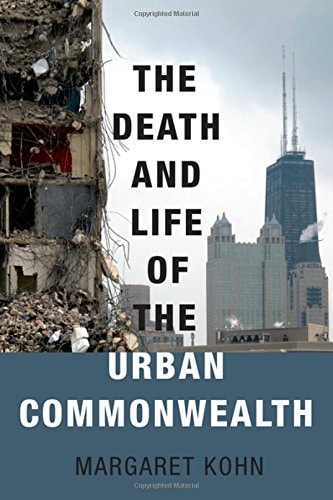
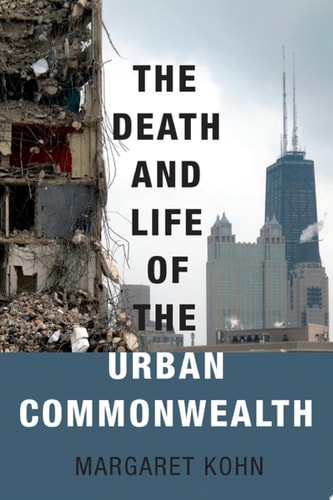
The Death and Life of the Urban Commonwealth
0
0
As an Amazon Associate and affiliate partner, Menrva Books earns from qualifying purchases. Learn more
Author Description
The city is a paradoxical space, in theory belonging to everyone, in practice inaccessible to people who cannot afford the high price of urban real estate. Within these urban spaces are public and social goods including roads, policing, transit, public education, and culture, all of which have been created through multiple hands and generations, but that are effectively only for the use of those able to acquire private property. Why should this be the case? As Margaret Kohn argues, when people lose access to the urban commons, they are dispossessed of something to which they have a rightful claim - the right to the city. Political theory has much to say about individual rights, equality, and redistribution, but it has largely ignored the city. In response, Kohn turns to a mostly forgotten political theory called solidarism to interpret the city as a form of common-wealth. In this view, the city is a concentration of value created by past generations and current residents: streets, squares, community centers, schools and local churches. Although the legal title to these mixed spaces includes a patchwork of corporate, private, and public ownership, if we think of the spaces as the common-wealth of many actors, the creation of a new framework of value becomes possible. Through its novel mix of political and urban theory, The Death and Life of the Urban Commonwealth proposes a productive way to rethink struggles over gentrification, public housing, transit, and public space.
Menrva's Summary
THE THESIS
This book investigates the paradox of urban spaces that are theoretically public but practically inaccessible, arguing for a reconceptualization of the city as a common-wealth. Margaret Kohn, a professor of political science, utilizes the framework of solidarism to challenge the current dominance of private property rights in urban environments. By analyzing the city as a collective creation of past and present generations, she proposes a new political theory to address issues of inequality, gentrification, and public resource management.
THE SCOPE MAP
What You Will Find
- A historical and theoretical analysis of solidarism as a political framework
- A critique of contemporary urban real estate and property ownership models
- Theoretical applications for public housing, transit, and community infrastructure
Scope Limits
- The text does not provide a step-by-step policy guide for municipal implementation
- The analysis focuses primarily on political theory rather than empirical urban planning data
THE AUTHORITY PERSPECTIVE
Experts in urban studies and political theory recognize this work as a sophisticated contribution to the discourse on urban justice and the right to the city. Readers frequently note the academic density of the prose, which is intended for scholars and advanced students of political philosophy.
Page Count:
280
Publication Date:
2016-10-10
Publisher:
Oxford University Press
ISBN-10:
0190606592
ISBN-13:
9780190606596
Sociology
Political Theory
Public Policy
Public Spaces
Common Good
Commons
urban planning
Community Tags
Other Editions(3)

Similar Books