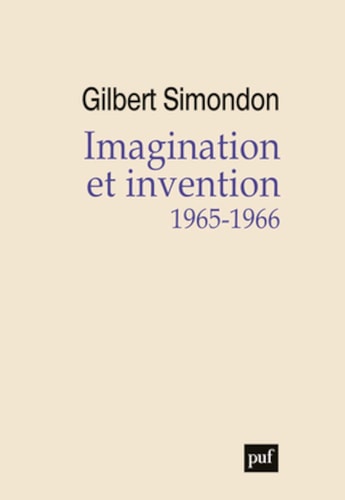
Imagination et invention 1965-1966
0
0
As an Amazon Associate and affiliate partner, Menrva Books earns from qualifying purchases. Learn more
Author Description
L'image mentale est comme un sous-ensemble relativement indépendant à l'intérieur de l'être vivant sujet. A sa naissance, l'image est un faisceau de tendances motrices, anticipation à long terme de l'expérience de l'objet; au cours de l'interaction entre l'organisme et le milieu, elle devient système d'accueil des signaux incidents et permet à l'activité perceptivo-motrice de s'exercer selon un mode progressif. Enfin, lorsque le sujet est à nouveau séparé de l'objet, l'image, enrichie des apports cognitifs et intégrant la résonance affectivo-émotive de l'expérience, devient symbole. De l'univers de symboles intérieusement organisé, tendant à la saturation, peut surgir l'invention qui est la mise en jeu d'un système dimensionnel plus puissant, capable d'intégrer plus d'images complètes selon le mode de la comptabilité synergique. Après l'invention, le cycle recommence par une nouvelle anticipation de la rencontre de l'objet, qui peut être sa production. Imagination reprodructrice et invention ne sont plus considérées comme des réalités séparées ni des termes opposés, mais des phases successives d'un unique processus de genèse.
Menrva's Summary
THE THESIS
This work investigates the relationship between mental imagery, reproduction, and invention as successive phases of a single generative process. Gilbert Simondon, a philosopher known for his work on technology and individuation, explores the cognitive functions of mental images. Drawing on psychological and philosophical frameworks, he posits that mental images evolve from motor tendencies to symbolic representations, ultimately serving as the foundation for invention. The book examines how the organization of symbolic universes can lead to the creation of more powerful dimensional systems capable of integrating complex information, thereby advancing the cycle of anticipation and creation.
THE SCOPE MAP
- The nature and evolution of mental imagery in living beings.
- The role of mental images as anticipatory mechanisms for experience.
- The transformation of mental images into symbolic systems.
- The concept of invention as the emergence of more powerful dimensional systems.
- The synergistic accounting of complete images within symbolic universes.
- The cyclical process of imagination, invention, and new anticipation.
- The integration of cognitive and affective resonance in the formation of symbols.
THE AUTHORITY PERSPECTIVE
This posthumously published work by Gilbert Simondon offers a deep dive into the philosophical underpinnings of imagination and invention. The text is dense and analytical, characteristic of Simondon's rigorous approach to understanding cognitive processes. It is likely to appeal to scholars and advanced students of philosophy, psychology, and cognitive science seeking to understand the mechanics of creative thought. The book's exploration of the generative cycle of imagination and invention provides a unique framework for analyzing intellectual progress.
Page Count:
206
Publication Date:
2014-01-01
Publisher:
Presses Universitaires de France
ISBN-10:
2130628370
ISBN-13:
9782130628378
Non-Fiction
Philosophy
Psychology
Community Tags
Similar Books