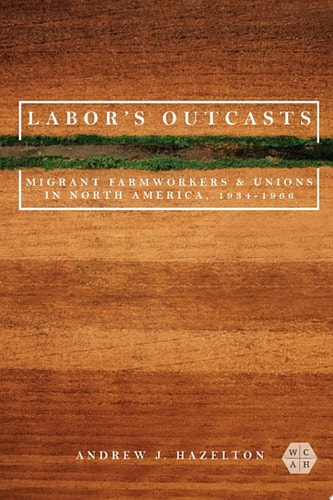
Labor's Outcasts: Migrant Farmworkers and Unions in North America, 1934-1966
0
0
As an Amazon Associate and affiliate partner, Menrva Books earns from qualifying purchases. Learn more
Author Description
In the mid-twentieth century, corporations consolidated control over agriculture on the backs of Mexican migrant laborers through a guestworker system called the Bracero Program. The National Agricultural Workers Union (NAWU) attempted to organize these workers but met with utter indifference from the AFL-CIO. Andrew J. Hazelton examines the NAWU's opposition to the Bracero Program against the backdrop of Mexican migration and the transformation of North American agriculture. His analysis details growers' abuse of the program to undercut organizing efforts, the NAWU's subsequent mobilization of reformers concerned by those abuses, and grower opposition to any restrictions on worker control. Though the union's organizing efforts failed, it nonetheless created effective strategies for pressuring growers and defending workers' rights. These strategies contributed to the abandonment of the Bracero Program in 1964 and set the stage for victories by the United Farm Workers and other movements in the years to come.
Menrva's Summary
THE THESIS
This book investigates the complex relationship between labor unions, migrant farmworkers, and corporate agriculture in North America during a pivotal period of labor consolidation and migration. Andrew J. Hazelton details the efforts of the National Agricultural Workers Union (NAWU) to organize Mexican migrant laborers, particularly within the context of the Bracero Program, and their struggle against corporate growers who exploited the program to suppress unionization. The analysis highlights the NAWU's mobilization of reformers against grower abuses and the growers' resistance to any worker protections, ultimately demonstrating how the union's strategies, despite their initial organizing failures, contributed to the Bracero Program's termination and paved the way for future labor movements.
THE SCOPE MAP
- The consolidation of corporate control over agriculture through the Bracero Program.
- The National Agricultural Workers Union's (NAWU) attempts to organize Mexican migrant laborers.
- The AFL-CIO's indifference to the plight of migrant farmworkers.
- Growers' use of the Bracero Program to undermine unionization efforts.
- The NAWU's mobilization of reformers and the opposition they faced from growers.
- The development of effective strategies for pressuring growers and defending workers' rights.
- The eventual abandonment of the Bracero Program and its impact on subsequent labor movements.
THE AUTHORITY PERSPECTIVE
This work examines the historical context of migrant labor and unionization in North America, focusing on the Bracero Program and the National Agricultural Workers Union's efforts. It details the systemic abuses of the program by agricultural corporations and the union's strategic responses, highlighting the eventual success in contributing to the program's termination. The analysis suggests a nuanced understanding of labor history, emphasizing the long-term impact of strategic organizing even in the face of immediate setbacks.
Page Count:
256
Publication Date:
2022-09-13
Publisher:
University of Illinois Press
ISBN-10:
0252053648
ISBN-13:
9780252053641
History
Non-Fiction
Migration Studies
Labor history
Community Tags
Similar Books