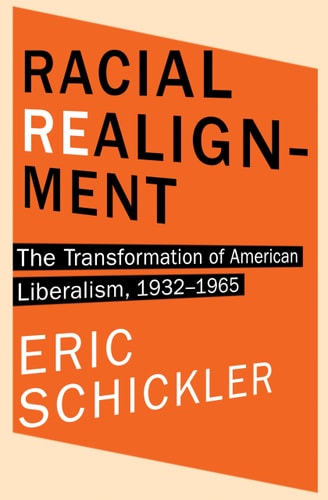
Racial Realignment: The Transformation of American Liberalism, 1932-1965
0
0
As an Amazon Associate and affiliate partner, Menrva Books earns from qualifying purchases. Learn more
Author Description
Few transformations in American politics have been as important as the integration of African Americans into the Democratic Party and the Republican embrace of racial policy conservatism. The story of this partisan realignment on race is often told as one in which political elites--such as Lyndon Johnson and Barry Goldwater--set in motion a dramatic and sudden reshuffling of party positioning on racial issues during the 1960s. Racial Realignment instead argues that top party leaders were actually among the last to move, and that their choices were dictated by changes that had already occurred beneath them. Drawing upon rich data sources and original historical research, Eric Schickler shows that the two parties' transformation on civil rights took place gradually over decades. Schickler reveals that Democratic partisanship, economic liberalism, and support for civil rights had crystallized in public opinion, state parties, and Congress by the mid-1940s. This trend was propelled forward by the incorporation of African Americans and the pro-civil-rights Congress of Industrial Organizations into the Democratic coalition. Meanwhile, Republican partisanship became aligned with economic and racial conservatism. Scrambling to maintain existing power bases, national party elites refused to acknowledge these changes for as long as they could, but the civil rights movement finally forced them to choose where their respective parties would stand. Presenting original ideas about political change, Racial Realignment sheds new light on twentieth and twenty-first century racial politics.
Menrva's Summary
THE THESIS
The integration of African Americans into the Democratic Party and the Republican embrace of racial policy conservatism represent a pivotal transformation in American politics. This book argues that the significant partisan realignment on race, often attributed to the dramatic choices of political elites in the 1960s, was in fact a gradual process driven by shifts in public opinion and grassroots movements over decades. Eric Schickler demonstrates that by the mid-1940s, Democratic partisanship, economic liberalism, and support for civil rights had already solidified within the electorate and Congress, bolstered by the inclusion of African Americans and the CIO into the Democratic coalition. Concurrently, the Republican Party increasingly aligned with economic and racial conservatism, with national party leaders lagging behind these fundamental changes until external pressures, particularly the civil rights movement, compelled them to formally acknowledge their parties' new directions.
THE SCOPE MAP
- Analysis of the transformation of American liberalism and conservatism on racial issues between 1932 and 1965.
- Examination of the gradual, decades-long process of partisan realignment on race, challenging the notion of a sudden shift in the 1960s.
- Data-driven research showing how public opinion, state parties, and congressional voting patterns preceded elite decisions.
- The role of African Americans and the Congress of Industrial Organizations (CIO) in shaping the Democratic coalition.
- The crystallization of economic and racial conservatism within the Republican Party.
- The impact of the civil rights movement in forcing national party elites to confront changing party alignments.
THE AUTHORITY PERSPECTIVE
The book is recognized for its original contribution to understanding political change, particularly in 20th and 21st-century racial politics. It challenges conventional narratives by emphasizing the role of grassroots movements and public opinion over elite decision-making in shaping party platforms on civil rights. The research is noted for its depth, drawing on rich data sources and original historical investigation to present a nuanced view of how the Democratic and Republican parties evolved their stances on race over several decades. This work offers a significant reinterpretation of a critical period in American political history.
Page Count:
359
Publication Date:
2016-01-01
Publisher:
Princeton University Press
ISBN-10:
0691153876
ISBN-13:
9780691153872
Non-Fiction
History
Politics
Race Relations
Community Tags
Similar Books