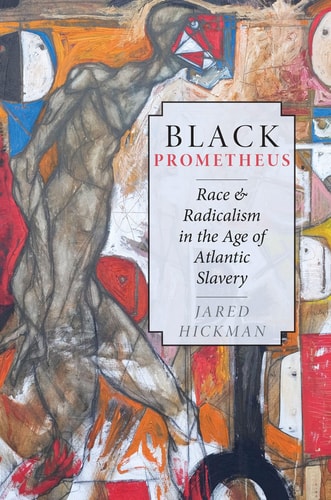
Black Prometheus: Race and Radicalism in the Age of Atlantic Slavery
0
0
As an Amazon Associate and affiliate partner, Menrva Books earns from qualifying purchases. Learn more
Author Description
How did an ancient mythological figure who stole fire from the gods become a face of the modern, lending his name to trailblazing spaceships and radical publishing outfits alike? How did Prometheus come to represent a notion of civilizational progress through revolution--scientific, political, and spiritual--and thereby to center nothing less than a myth of modernity itself? The answer Black Prometheus gives is that certain features of the myth--its geographical associations, iconography of bodily suffering, and function as a limit case in a long tradition of absolutist political theology--made it ripe for revival and reinvention in a historical moment in which freedom itself was racialized, in what was the Age both of Atlantic revolution and Atlantic slavery. Contained in the various incarnations of the modern Prometheus--whether in Mary Shelley's esoteric novel, Frankenstein, Denmark Vesey's real-world recruitment of slave rebels, or popular travelogues representing Muslim jihadists against the Russian empire in the Caucasus-- isa profound debate about the means and ends of liberation in our globalized world. Tracing the titan's rehabilitation and unprecedented exaltation in the eighteenth and nineteenth centuries across a range of genres and geographies turns out to provide a way to rethink the relationship between race, religion, and modernity and to interrogate the Eurocentric and secularist assumptions of our deepest intellectual traditions of critique.
Menrva's Summary
THE THESIS
This work investigates how the mythological figure of Prometheus was repurposed during the eighteenth and nineteenth centuries to articulate complex debates regarding race, liberation, and modernity within the context of Atlantic slavery. Jared Hickman, an associate professor of English, utilizes a multidisciplinary approach that combines literary analysis, political theology, and historical inquiry. He argues that the Promethean myth served as a critical framework for understanding the racialization of freedom and the contradictions inherent in Enlightenment-era concepts of progress.
THE SCOPE MAP
What You Will Find
- Analysis of the Promethean myth in eighteenth and nineteenth-century literature and political discourse.
- Examination of the intersection between religious iconography and secular revolutionary thought.
- Comparative study of diverse figures and texts, ranging from Mary Shelley’s Frankenstein to the actions of Denmark Vesey.
Scope Limits
- The text does not provide a comprehensive history of the Prometheus myth from antiquity to the present day.
- It does not focus on modern technological or scientific applications of the name Prometheus beyond its symbolic origins.
THE AUTHORITY PERSPECTIVE
Scholars in the fields of Atlantic history and literary studies frequently note the intellectual rigor and dense theoretical framework of Hickman’s analysis. Experts highlight this text as a significant contribution to understanding how racial dynamics shaped the intellectual history of the modern era.
Page Count:
544
Publication Date:
2020-05-07
Publisher:
Oxford University Press
ISBN-10:
0190077794
ISBN-13:
9780190077792
Politics
History
Political Philosophy
Sociology
Criticism history
Race Relations
Literary Criticism
Atlantic History
New Used & Rental Textbooks
Community Tags
Other Editions(3)
Similar Books