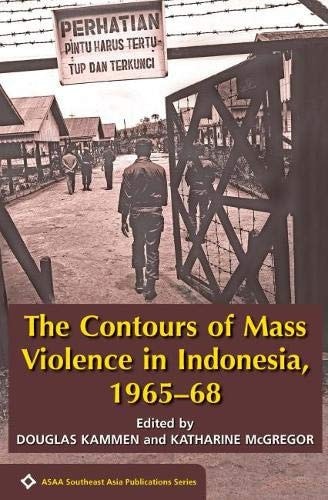
The Contours of Mass Violence in Indonesia, 1965-68
0
0
As an Amazon Associate and affiliate partner, Menrva Books earns from qualifying purchases. Learn more
Author Description
The violence directed against the political left in Indonesia from 1965 until 1968 has been the subject of intense speculation. The large number of deaths, brutal interrogations, as well as rape, torture, short- and long-term detention and on-going discrimination inflicted on hundreds of thousands of people make this a compelling topic. However, political sensitivities within Indonesia and a dearth of evidence made serious research on the topic extremely difficult under the New Order regime. The Contours of Mass Violence in Indonesia presents case studies from diverse locations throughout the Indonesian archipelago. The accounts revolve around the impact and interpretations of the September 30th Movement and its aftermath; the roles of military and civilian groups in fomenting and perpetrating violence; short- and long-term detention; and the legacies of the assault on the Political Left. Although events unfolded differently in various parts of the country, the violence amounted to a counter-revolution intended to curtail the mass mobilization and popular participation unleashed by the national revolution some twenty years earlier. The goal was to destroy the social bases of President Sukarno's left-leaning Guided Democracy, and to establish a military regime that was authoritarian and pro-Western. Students of Indonesia will learn much from the accounts in this volume, but the discussion will also benefit scholars concerned with the dynamics of mass violence, the Cold War, regime change and counter-revolution.
Menrva's Summary
THE THESIS
This book investigates the complex and often brutal mass violence that occurred in Indonesia between 1965 and 1968. The text examines the aftermath of the September 30th Movement, detailing the roles of both military and civilian groups in perpetrating violence, torture, and detention. It explores the long-term legacies of this counter-revolutionary period, which aimed to dismantle the social bases of President Sukarno's Guided Democracy and establish an authoritarian, pro-Western military regime. The book utilizes case studies from various locations across the Indonesian archipelago to illustrate these dynamics.
THE SCOPE MAP
- Case studies from diverse locations throughout the Indonesian archipelago.
- Analysis of the impact and interpretations of the September 30th Movement.
- Examination of the roles of military and civilian groups in fomenting and perpetrating violence.
- Discussion of short
- and long-term detention practices.
- Exploration of the legacies of the assault on the political Left.
- Contextualization of the violence as a counter-revolution against mass mobilization.
- Analysis of the geopolitical implications within the Cold War framework.
THE AUTHORITY PERSPECTIVE
The book is presented as a crucial academic work for students of Indonesia and scholars interested in mass violence, counter-revolution, and Cold War dynamics. Its focus on diverse case studies and the examination of both military and civilian roles suggests a comprehensive approach to understanding the complex events. The detailed exploration of detention and long-term legacies indicates a thorough investigation into the enduring impact of the violence. The work aims to shed light on a politically sensitive topic that was previously difficult to research due to a dearth of evidence.
Page Count:
305
Publication Date:
2012-01-01
Publisher:
NUS Press
ISBN-10:
9971696169
ISBN-13:
9789971696160
Politics
History
Non-Fiction
Social Science
Community Tags
Other Editions(2)
Similar Books