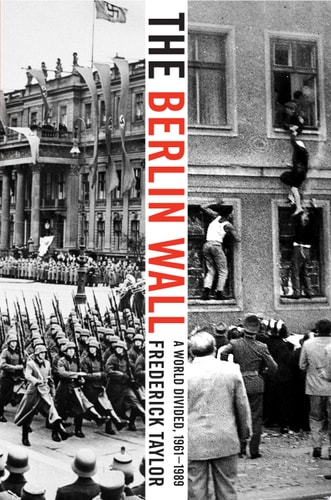
The Berlin Wall: A World Divided, 1961-1989
0
0
As an Amazon Associate and affiliate partner, Menrva Books earns from qualifying purchases. Learn more
Author Description
On the morning of August 13, 1961, the residents of East Berlin found themselves cut off from family, friends and jobs in the West by a tangle of barbed wire that ruthlessly cut a city of four million in two. Within days the barbed-wire entanglement would undergo an extraordinary metamorphosis: it became an imposing 103-mile-long wall guarded by three hundred watchtowers. A physical manifestation of the struggle between Soviet Communism and American capitalism—totalitarianism and freedom—that would stand for nearly thirty years, the Berlin Wall was the high-risk fault line between East and West on which rested the fate of all humanity. Many brave people risked their lives to overcome this lethal barrier, and some paid the ultimate price. In this captivating work, sure to be the definitive history on the subject, Frederick Taylor weaves together official history, archival materials and personal accounts to tell the complete story of the Wall's rise and fall, from the postwar political tensions that created a divided Berlin to the internal and external pressures that led to the Wall's demise. In addition, he explores the geopolitical ramifications as well as the impact the wall had on ordinary lives that is still felt today. For the first time the entire world faced the threat of imminent nuclear apocalypse, a fear that would be eased only when the very people the Wall had been built to breach it on the historic night of November 9, 1989. Gripping and authoritative, The Berlin Wall is the first comprehensive account of a divided city and its people in a time when the world seemed to stand permanently on the edge of destruction.
Menrva's Summary
THE THESIS
The Berlin Wall stood as a stark symbol of the Cold War, dividing a city and a world for nearly three decades. This imposing structure, born from barbed wire and evolving into a heavily guarded barrier, physically manifested the ideological conflict between Soviet Communism and American capitalism. It served as a high-risk fault line between East and West, where the fate of humanity seemed to hang in the balance. The book chronicles the Wall's construction, the brave attempts to overcome it, and its eventual fall, exploring both the geopolitical ramifications and the profound impact on ordinary lives.
THE SCOPE MAP
- The political tensions leading to the division of Berlin in the postwar era.
- The construction of the Berlin Wall, from barbed wire to a fortified barrier with watchtowers.
- The personal accounts of individuals who risked their lives to cross the Wall.
- The geopolitical significance of the Wall as a symbol of the Cold War.
- The internal and external pressures that ultimately led to the Wall's demise.
- The impact of the Wall on the daily lives of Berliners.
- The historical context of the threat of nuclear apocalypse during the Wall's existence.
- The events of November 9, 1989, when the Wall was breached.
THE AUTHORITY PERSPECTIVE
Frederick Taylor's "The Berlin Wall: A World Divided, 1961-1989" is widely regarded as a definitive and comprehensive history of the subject. The book is praised for its authoritative narrative, weaving together official histories, archival materials, and personal accounts to provide a complete story of the Wall's rise and fall. It is noted for its gripping presentation of the geopolitical stakes and the human cost associated with this potent symbol of the Cold War. The work is considered essential for understanding this critical period of global history and its lasting impact.
Page Count:
486
Publication Date:
2006-01-01
Publisher:
Harper Collins
ISBN-10:
0060786132
ISBN-13:
9780060786137
Politics
Non-Fiction
History
Cold War
Community Tags
Similar Books