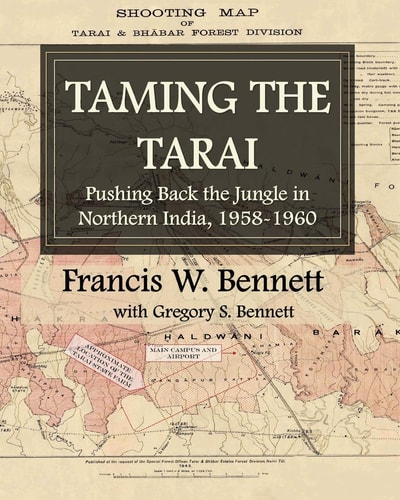
Taming the Tarai: Pushing Back the Jungle in Northern India, 1958-1960
0
0
As an Amazon Associate and affiliate partner, Menrva Books earns from qualifying purchases. Learn more
Author Description
From 1958-1960, the Bennett family lived on the 16,000-acre Tarai State Farm in northern India, a swampy flatland on the lower slopes of the Himalayan foothills. As part of the "Green Revolution," the U.S. Department of State had hired Francis Bennett as an agricultural engineer to move to the Farm and help it prepare for the founding the first land-grant university in India. Within a month of living on the Tarai State Farm, however, it was clear there was a problem. Workers in the field were coming in close contact with an active tiger population roaming throughout the Farm. Tigers were attacking cattle and people, making it dangerous for the over 3,000 employees and their families living and working there. Before Indian independence, the area had been part of a designated hunting area within the government forest division. Tigers that had left the area when the jungle was bulldozed down to make way for cropland were returning under cover of the tall kans grass that flourished throughout the Farm. This book is a true and sincere documentary based on personal experiences concerning two years of working on the Farm to improve agricultural mechanization, turn back the kans-grass jungle, and help make the Farm safe and ready to become what is now the G.B. Pant University of Agriculture and Technology.
Menrva's Summary
THE THESIS
The establishment of India's first land-grant university is jeopardized by the return of a dangerous tiger population to the project's agricultural farm. Francis Bennett, an agricultural engineer hired by the U.S. Department of State, arrives at the 16,000-acre Tarai State Farm in northern India in 1958 with the mission to modernize its agricultural practices and prepare it for its future as a university. However, his work is immediately complicated by the presence of tigers, which have returned to the farm due to the clearing of jungle for farmland and the flourishing kans grass. These tigers pose a significant threat to the over 3,000 employees and their families, as well as the farm's cattle, making the project dangerous and hindering progress.
THE SCOPE MAP
- A firsthand account of agricultural mechanization efforts in northern India during the late 1950s.
- Details on the challenges of reclaiming and managing land overgrown with kans grass.
- Personal experiences of living and working on the Tarai State Farm.
- An examination of the human-wildlife conflict, specifically involving tigers, in the region.
- The historical context of the "Green Revolution" and the establishment of agricultural universities in India.
THE AUTHORITY PERSPECTIVE
This memoir offers a personal perspective on a critical period of agricultural development in India, blending historical context with firsthand accounts. The narrative focuses on the practical challenges of modernization and the unexpected ecological hurdles encountered. The inclusion of personal experiences provides an intimate look at the human element involved in such large-scale projects. The book's documentary style suggests a straightforward and factual presentation of events.
Page Count:
388
Publication Date:
2017-11-10
Publisher:
Outskirts Press, Incorporated
ISBN-10:
1478793775
ISBN-13:
9781478793779
Non-Fiction
Memoir
History
Agriculture
India
Community Tags
Similar Books