Holocaust Survivors in Postwar Germany, 1945-1957
0
0
As an Amazon Associate and affiliate partner, Menrva Books earns from qualifying purchases. Learn more
Author Description
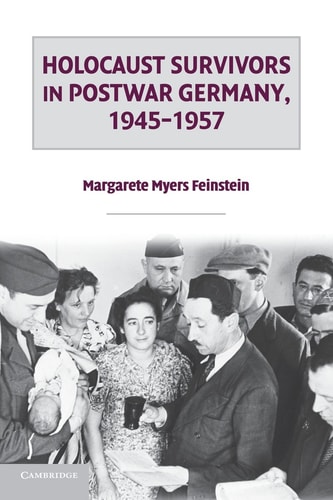
Stranded in Germany after the Second World War, 300,000 Holocaust survivors began to rebuild their lives while awaiting emigration. Brought together by their shared persecution, Jewish displaced persons forged a vibrant community, redefining Jewish identity after Auschwitz. Asserting their dignity as Jews, they practiced Jewish rituals, created new families, embraced Zionism, agitated against British policies in Palestine, and tried to force Germans to acknowledge responsibility for wartime crimes. In Holocaust Survivors in Postwar Germany, Margarete Myers Feinstein uses survivor memoirs and interviews, allowing the reader to "hear" the survivors' voices, focusing on the personal aspects of the transition to normalcy. Unlike previous political histories, this study emphasizes Jewish identity and cultural life after the war.
Menrva's Summary
THE THESIS
This book investigates the complex lives of Holocaust survivors in post-World War II Germany, focusing on their efforts to rebuild and redefine Jewish identity. Margarete Myers Feinstein utilizes survivor memoirs and interviews to illuminate the personal experiences of approximately 300,000 Jewish displaced persons who remained in Germany after the war. The study highlights their creation of vibrant communities, their practice of Jewish rituals, the formation of new families, their embrace of Zionism, and their activism against British policies in Palestine, all while seeking German accountability for wartime atrocities. Unlike purely political histories, this work centers on the resurgence of Jewish identity and cultural life in the immediate post-war period.
THE SCOPE MAP
- Detailed examination of the lives of 300,000 Holocaust survivors in post-war Germany (1945-1957).
- Analysis of how survivors forged a vibrant community and redefined Jewish identity after the Holocaust.
- Exploration of the practice of Jewish rituals, creation of new families, and embrace of Zionism among survivors.
- Discussion of survivor activism, including agitation against British policies in Palestine.
- Focus on survivors' efforts to compel Germans to acknowledge responsibility for wartime crimes.
- Use of survivor memoirs and interviews to provide personal perspectives and 'hear' survivor voices.
- Emphasis on Jewish identity and cultural life after the war, distinguishing it from previous political histories.
THE AUTHORITY PERSPECTIVE
This study is regarded as a significant contribution to Holocaust and Jewish studies, particularly for its focus on the post-war experiences of survivors within Germany. By centering survivor voices through memoirs and interviews, the book offers a deeply personal account of rebuilding lives and identities. It is noted for shifting the historical emphasis from purely political narratives to the resurgence of Jewish cultural life and identity in the immediate post-war era. The work is appreciated for its detailed exploration of the survivors' agency in seeking justice and re-establishing their communities.
Page Count:
342
Publication Date:
2014-07-17
Publisher:
Cambridge University Press
ISBN-10:
1107670195
ISBN-13:
9781107670198
Psychology
Politics
Non-Fiction
History
Jewish Studies
Community Tags
Other Editions(2)

Similar Books