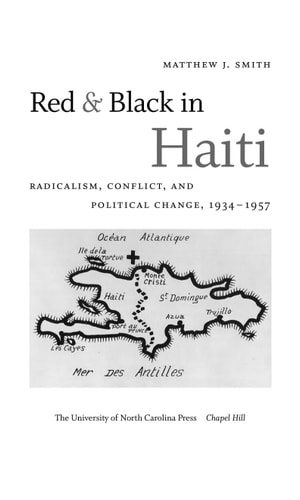
Red and Black in Haiti: Radicalism, Conflict, and Political Change, 1934-1957
0
0
As an Amazon Associate and affiliate partner, Menrva Books earns from qualifying purchases. Learn more
Author Description
In 1934 the republic of Haiti celebrated its 130th anniversary as an independent nation. In that year, too, another sort of Haitian independence occurred, as the United States ended nearly two decades of occupation. In the first comprehensive political history of postoccupation Haiti, Matthew Smith argues that the period from 1934 until the rise of dictator Francois "Papa Doc" Duvalier to the presidency in 1957 constituted modern Haiti's greatest moment of political promise. Smith emphasizes the key role that radical groups, particularly Marxists and black nationalists, played in shaping contemporary Haitian history. These movements transformed Haiti's political culture, widened political discourse, and presented several ideological alternatives for the nation's future. They were doomed, however, by a combination of intense internal rivalries, pressures from both state authorities and the traditional elite class, and the harsh climate of U.S. anticommunism. Ultimately, the political activism of the era failed to set Haiti firmly on the path to a strong independent future.
Menrva's Summary
THE THESIS
This book investigates the pivotal period in Haitian history following the end of the U.S. occupation, examining the rise and fall of radical political movements that shaped the nation's trajectory. Matthew J. Smith, a historian specializing in Caribbean and African diaspora history, analyzes the era from 1934 to 1957, a time he posits as Haiti's greatest moment of political promise. The book focuses on the significant influence of Marxist and black nationalist groups, which broadened political discourse and offered alternative visions for Haiti's future. Despite their transformative impact on Haitian political culture, these movements were ultimately undermined by internal divisions, elite opposition, state pressures, and the pervasive climate of U.S. anticommunism, preventing Haiti from establishing a strong, independent path forward.
THE SCOPE MAP
- The political landscape of Haiti from 1934 to 1957, immediately following the U.S. occupation.
- The role and impact of radical groups, including Marxists and black nationalists, on Haitian politics and culture.
- Analysis of internal rivalries and external pressures (elite class, state authorities, U.S. anticommunism) that affected radical movements.
- The ideological alternatives presented by these movements for Haiti's future development.
- An argument for this period as a moment of significant political promise for modern Haiti.
- The ultimate failure of these movements to secure a strong, independent future for the nation.
THE AUTHORITY PERSPECTIVE
The book is regarded as a comprehensive political history of post-occupation Haiti, emphasizing the crucial role of radical groups in shaping the nation's political culture and discourse. The analysis highlights the internal and external factors that led to the suppression of these movements, despite their potential to offer ideological alternatives for Haiti's future. The work is noted for its detailed examination of the period between the end of the U.S. occupation and the rise of François 'Papa Doc' Duvalier. It presents a nuanced perspective on Haiti's struggle for a strong, independent future.
Page Count:
296
Publication Date:
2009-05-15
Publisher:
The University of North Carolina Press
ISBN-10:
0807859370
ISBN-13:
9780807859377
History
Politics
Non-Fiction
Social History
Community Tags
Other Editions(2)

Similar Books