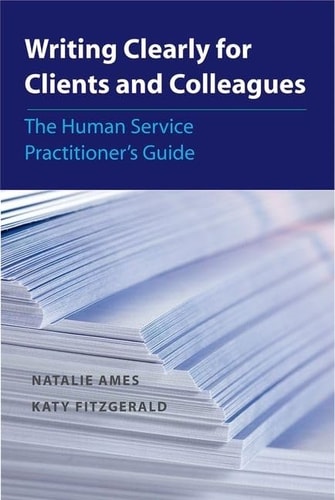
Writing Clearly for Clients and Colleagues: The Human Service Practitioner's Guide
0
0
As an Amazon Associate and affiliate partner, Menrva Books earns from qualifying purchases. Learn more
Author Description
If you have ever waded through a rambling case summary, a jargon-heavy program description, or a poorly organized training manual, you are aware of how important it is for human service agencies' written materials to be clear and concise. Whether in print or electronic format, most agencies must provide information to a variety of audiences. Ames and FitzGerald have developed a guide to help human service professionals clearly communicate valuable information to board members, funding sources, volunteers, and-perhaps most importantly-clients with limited literacy skills.The book highlights how readers can apply readability guidelines to improve all of the print and electronic materials agencies use to communicate with internal and external audiences. Whether creating a brochure, sending an email, writing a grant, or documenting case records, human service professionals can make their messages clear and understandable by following the guide's simple rules and practical suggestions.
Menrva's Summary
THE THESIS
How can human service practitioners improve the clarity and accessibility of their professional writing to better serve diverse audiences? Katy Fitzgerald and Natalie Ames argue that by applying specific readability guidelines, professionals can bridge the communication gap between agencies and their stakeholders, including clients with limited literacy skills.
THE SCOPE MAP
What You Will Find
- Readability guidelines for print and electronic communications
- Practical strategies for simplifying jargon-heavy documentation
- Techniques for tailoring messages to board members, funders, and clients
- Application of writing principles to brochures, emails, and grant proposals
Scope Limits
- The text does not cover advanced creative writing or academic publishing standards
- It does not address legal or regulatory compliance requirements for specific state-mandated documentation
THE AUTHORITY PERSPECTIVE
Professionals in the human services field frequently cite this guide as a practical, accessible resource for improving organizational communication. Experts highlight the book's utility in translating complex agency information into clear, actionable language for diverse populations.
Page Count:
165
Publication Date:
2015-07-01
Publisher:
Oxford University Press
ISBN-10:
0190615605
ISBN-13:
9780190615604
Politics
Non-Fiction
Technical Writing
Professional Development
Human services
Communication
New Used & Rental Textbooks
Community Tags
Similar Books