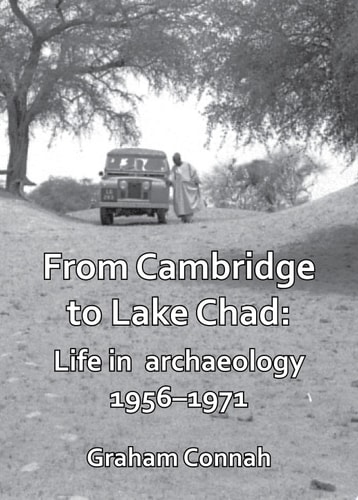
From Cambridge to Lake Chad: Life in Archaeology 1956–1971
0
0
As an Amazon Associate and affiliate partner, Menrva Books earns from qualifying purchases. Learn more
Author Description
This book is about how the author became an archaeologist at a time when opportunities for employment were rare and how he worked as a field researcher in West Africa and wrote about his work there. It traces his archaeological training and employment at Cambridge and his practical experience on British excavations and explains how he became one of the pioneers of Nigerian archaeology during a decade in that country. It is not so much a study of the archaeology that was done, as an account of how it was done; its circumstances, organization, and economic and social and cultural context. As a result, it is both a professional and personal account, for these two aspects of life were inseparably intertwined, his wife Beryl becoming an integral part of the story. Other archaeologists and many non-archaeologists also feature in the account. The period in Nigeria from 1961 to 1971 included the Nigerian Civil War from 1967 to 1970, when archaeological work continued with difficulty. Both circumstances and preference meant that the author always worked with a labour team of Nigerians and with Nigerian assistants, of whom few had any experience in archaeology and none had any formal training; there were no postgraduates or others from outside the country. Success in excavations in Benin City, in the south of the country, and in Borno, in its far north-east, was as much the achievement of those Nigerians as it was the author's.
Menrva's Summary
THE THESIS
This book chronicles the formative years of an archaeologist navigating a nascent field and the challenging landscapes of West Africa. Graham Connah recounts his journey from training at Cambridge to becoming a pioneer of Nigerian archaeology, detailing the practicalities, organization, and socio-economic context of fieldwork. The narrative emphasizes the collaborative nature of his work, highlighting the contributions of his Nigerian teams and assistants, particularly during the difficult period of the Nigerian Civil War.
THE SCOPE MAP
- An account of archaeological training and employment at Cambridge University.
- Details of practical experience on British excavations.
- The author's role as a pioneer of Nigerian archaeology.
- An explanation of the circumstances, organization, and context of archaeological fieldwork in Nigeria.
- Personal and professional intertwining, including the role of the author's wife, Beryl.
- Features of other archaeologists and non-archaeologists.
- Experiences during the Nigerian Civil War (1967-1970) and its impact on archaeological work.
THE AUTHORITY PERSPECTIVE
The book offers a detailed, personal account of archaeological practice during a specific historical period and geographical region. It focuses on the 'how' of archaeology rather than solely the 'what,' providing insight into the organizational and social dynamics of fieldwork. The narrative highlights the author's collaborative approach and the significant contributions of his Nigerian colleagues, underscoring the shared achievements in discoveries made.
Page Count:
298
Publication Date:
2019-01-31
Publisher:
Archaeopress Publishing Ltd
ISBN-10:
1784919594
ISBN-13:
9781784919597
History
Non-Fiction
Biography
Archaeology
Africa
Community Tags
Similar Books