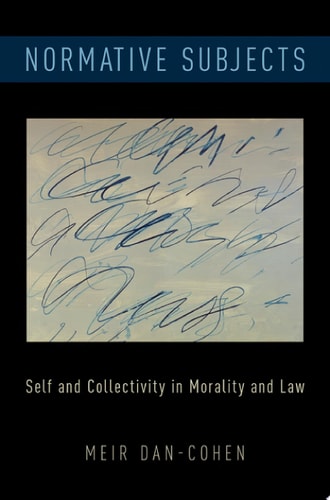
Normative Subjects: Self and Collectivity in Morality and Law
0
0
As an Amazon Associate and affiliate partner, Menrva Books earns from qualifying purchases. Learn more
Author Description
Normative Subjects alludes to the fields of morality and law, as well as to the entities, self and collectivity, addressed by these clusters of norms. The book explores connections between the two. The conception of self that informs this book is the joint product of two multifaceted philosophical strands, the constructivist and the hermeneutical. Various schools of thought view human beings as self creating: by pursuing our goals and promoting our projects, and so while abiding by the various norms that guide us in these endeavors, we also determine human identity. The result is an emphasis on a reciprocal relationship between law and morality on the one side and the composition and boundaries of the self on the other. In what medium does this self creation take place, and who exactly is the “we” engaged in it? The answer suggested by the hermeneutical tradition provides the book with its second main theme. Like plays and novels, human beings are constituted by meaning, and these meanings vary in their level of abstraction. Self creation is a matter of fixing and elaborating these meanings at different levels of abstraction: the individual, the collective, and the universal. A key implication of this picture, explored in the book, is a conception of human dignity as accruing to us qua authors of the values and norms by which we define our selves individually and collectively.
Menrva's Summary
THE THESIS
This book investigates the reciprocal relationship between the construction of the self and the normative frameworks of law and morality. Meir Dan-Cohen, a scholar of legal theory, synthesizes constructivist and hermeneutical philosophical traditions to argue that human identity is formed through the pursuit of goals within normative structures. He posits that individuals and collectives define themselves by authoring the very values and norms that govern their existence, thereby linking human dignity to this creative process.
THE SCOPE MAP
What You Will Find
- A philosophical framework integrating constructivism and hermeneutics.
- Analysis of the relationship between individual identity and collective norms.
- Exploration of human dignity as a product of normative authorship.
- Examination of how meaning is fixed at individual, collective, and universal levels.
Scope Limits
- The text does not provide a practical guide for legal practice or policy implementation.
- It does not offer an exhaustive historical survey of all moral philosophies.
THE AUTHORITY PERSPECTIVE
Legal scholars and philosophers frequently identify this work as a sophisticated contribution to the intersection of jurisprudence and moral philosophy. Readers often note the high level of academic density and the abstract nature of the prose, which requires significant familiarity with continental and analytical philosophical traditions.
Page Count:
270
Publication Date:
2016-01-01
Publisher:
Oxford University Press
ISBN-10:
0190614498
ISBN-13:
9780190614492
Philosophy
Political Philosophy
Jurisprudence
Law and ethics
Law
Legal Theory
Ethics
Professional Career & Trade
Self Philosophy
Community Tags
Similar Books