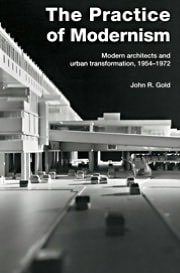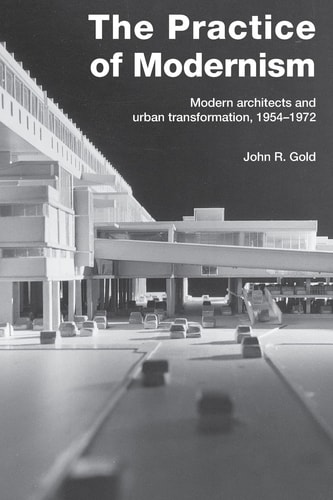
The Practice of Modernism: Modern Architects and Urban Transformation, 1954-1972
0
0
As an Amazon Associate and affiliate partner, Menrva Books earns from qualifying purchases. Learn more
Author Description
In this sequel to his widely-acclaimed book The Experience of Modernism (1997), John Gold continues his detailed enquiry into the Modern Movement's involvement in urban planning and city design. Making extensive use of information gained from hours of in-depth interviews with architects of the time, this new book examines the complex relationship between vision and subsequent practice in the saga of postwar urban reconstruction. The Practice of Modernism: traces the personal, institutional and professional backgrounds of the architects involved in schemes for reconstruction and replanning deals directly with the progress of urban transformation, focusing on the contribution that modern architects and architectural principles made to town centre renewal and social housing highlights how the exuberance of the 1960s gave way to the profound reappraisal that emerged by the early 1970s. Written by an expert, this is a key book on the planning aspects of the modernist movement for architectural historians, urban geographers, planners and all concerned with understanding the recent history of the contemporary city.
Menrva's Summary
THE THESIS
This book investigates the complex interplay between the visionary ideals of modern architecture and their practical application in the urban transformation of the post-war era. John Gold, building on his previous work, delves into the personal, institutional, and professional contexts of architects involved in reconstruction and replanning schemes between 1954 and 1972. The book examines how modernist principles shaped town center renewal and social housing projects, charting the shift from the optimism of the 1960s to a critical reassessment by the early 1970s. It utilizes extensive interview data with architects of the period to illuminate the realities of implementing modernist visions in urban design.
THE SCOPE MAP
- Detailed examination of the personal, institutional, and professional backgrounds of architects involved in postwar urban reconstruction.
- Analysis of the progress of urban transformation, focusing on town center renewal and social housing projects.
- Exploration of the contribution of modern architects and architectural principles to city design.
- Tracing the evolution of modernist urban planning from the exuberance of the 1960s to the reappraisal of the early 1970s.
- Extensive use of in-depth interviews with architects of the period.
- A sequel to John Gold's acclaimed book, 'The Experience of Modernism'.
THE AUTHORITY PERSPECTIVE
As a sequel to a widely-acclaimed work, 'The Practice of Modernism' is positioned as a key text for understanding the planning aspects of the modernist movement. Its focus on the practical application of architectural principles in postwar urban reconstruction, supported by extensive interviews, suggests a detailed and nuanced historical account. The book is likely to be valued by architectural historians, urban geographers, and planners for its insights into the recent history of the contemporary city. The narrative arc, moving from the optimism of the 1960s to the reappraisal of the early 1970s, indicates a critical and analytical approach to the subject.
Page Count:
336
Publication Date:
2007-01-01
Publisher:
Routledge
ISBN-10:
041525843X
ISBN-13:
9780415258432
History
Architecture
Non-Fiction
urban planning
Modernism
Architectural History
Community Tags
Similar Books