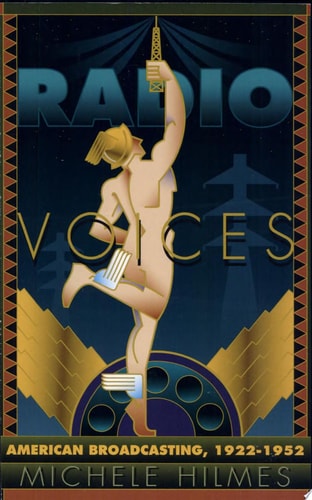
Radio Voices: American Broadcasting, 1922-1952
0
0
As an Amazon Associate and affiliate partner, Menrva Books earns from qualifying purchases. Learn more
Author Description
An overview of radio's impact on American culture in the first half of the twentieth century. The Shadow. Fibber McGee and Molly. Amos 'n' Andy. When we think back on the golden age of radio, we think of the shows. In Radio Voices, Michele Hilmes looks at the way radio programming influenced and was influenced by the United States of the 1920s, 1930s, and 1940s, tracing the history of the medium from its earliest years through the advent of television. Hilmes places the development of radio within the context of the turmoils of the 1920s: immigration and urbanization, the rise of mass consumer culture, and the changing boundaries of the public and private spheres. Early practices and structures -- the role of the announcer, the emergence of program forms from vaudeville, minstrel shows, and the concert stage -- are examined. Central to Radio Voices is a discussion of programs and their relations to popular understandings of race, ethnicity, and gender in the United States of this era. Hilmes explores Amos 'n' Andy and its negotiations of racial tensions and The Rise of the Goldbergs and its concern with ethnic assimilation. She reflects upon the daytime serials -- the first soap operas -- arguing that these much-disparaged programs provided a space in which women could discuss conflicted issues of gender. Hilmes also explores industry practices, considering the role of advertising agencies and their areas of conflict and cooperation with the emerging networks as well as the impact of World War II on the "mission" of radio. Radio Voices places the first truly national medium of the United States in its social context, providing an entertaining account of the interplay betweenprogramming and popular culture.
Menrva's Summary
THE THESIS
Radio Voices examines the profound and multifaceted impact of radio programming on American culture between 1922 and 1952, a period that saw the medium rise to national prominence and shape societal norms.
THE SCOPE MAP
- An examination of radio's influence on American culture during the 1920s, 1930s, and 1940s.
- Exploration of the historical context, including immigration, urbanization, and the rise of mass consumer culture.
- Analysis of early radio practices, such as the role of announcers and the emergence of program forms from vaudeville and minstrel shows.
- Discussion of how programs like 'Amos 'n' Andy' and 'The Goldbergs' engaged with popular understandings of race, ethnicity, and gender.
- An argument for the significance of daytime serials (soap operas) as a space for women to discuss gender issues.
- Consideration of industry practices, including the role of advertising agencies and their relationships with networks.
- An assessment of World War II's impact on radio's perceived 'mission'.
THE AUTHORITY PERSPECTIVE
This book is regarded as a significant contribution to the understanding of early American broadcasting and its cultural significance. It is noted for its detailed analysis of how radio programming reflected and influenced societal attitudes towards race, ethnicity, and gender during a pivotal era. The work is praised for placing the development of radio within its broader social and historical context, offering an engaging account of the interplay between programming and popular culture. The examination of specific programs and their negotiation of social issues provides a rich understanding of the medium's power.
Page Count:
353
Publication Date:
1997-01-01
Publisher:
U of Minnesota Press
ISBN-10:
0816626219
ISBN-13:
9780816626212
History
Non-Fiction
Media Studies
American Studies
Cultural History
Broadcasting
Community Tags
Similar Books