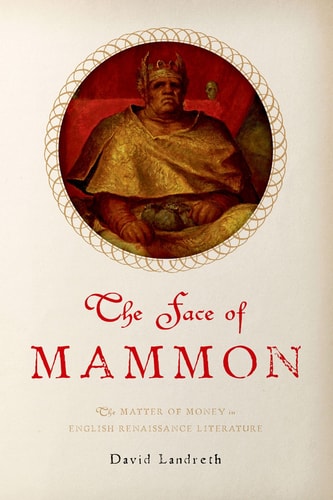
The Face of Mammon: The Matter of Money in English Renaissance Literature
0
0
As an Amazon Associate and affiliate partner, Menrva Books earns from qualifying purchases. Learn more
Author Description
Money talked in sixteenth-century England, as money still does today. But what the sixteenth century's gold and silver had to say for itself is strikingly different from the modern discourse of money. As David Landreth demonstrates in The Face of Mammon, the material and historical differences between the coins of the English Renaissance and today's paper and electronic money propel a distinctive and complex assessment of the relation between material substance and human value.Although the sixteenth century was marked by the traumatic emergence of conditions that would prove to be characteristic of the modern economy, the discipline of economics had not been invented to assess those conditions. The Face of Mammon considers how literary texts investigated these unexplained material transformations through attention to the materiality of gold and silver money. In new readings of Spenser's Faerie Queene, Marlowe's Jew of Malta, three plays by Shakespeare--King John, The Merchant of Venice, and Measure for Measure--the poetry of John Donne, and the prose of Thomas Nashe, Landreth argues that these texts situate the act of exchange at the center of a system of "common wealth" that sought to integrate political, ethical, and religious values with material ones, and probe the ways in which market value corrodes that system even as it depends upon it.Joining the methods of material-culture studies to those of economic criticism, The Face of Mammon offers a new account of the historical transformations of the concept of value to scholars of early modern literature, culture, and art, as well as to those interested in economic history.
Menrva's Summary
THE THESIS
This book investigates how English Renaissance literature conceptualized the relationship between the material substance of gold and silver currency and the formation of human, political, and ethical value. David Landreth, a scholar of early modern literature, utilizes a framework that bridges material-culture studies and economic criticism to analyze how authors navigated the transition toward modern economic conditions. He argues that Renaissance texts treated the act of exchange as a central component of a 'common wealth' system, exploring how market forces simultaneously relied upon and eroded traditional social and religious values.
THE SCOPE MAP
What You Will Find
- Analysis of sixteenth-century economic conditions prior to the formal invention of economics.
- Close readings of works by Spenser, Marlowe, Shakespeare, John Donne, and Thomas Nashe.
- Examination of the physical materiality of coins versus modern paper and electronic currency.
Scope Limits
- The study does not provide a comprehensive history of modern economic theory.
- It does not cover literature outside of the English Renaissance period.
THE AUTHORITY PERSPECTIVE
Scholars in the field of early modern studies recognize this work as a significant contribution to the intersection of economic history and literary analysis. Readers frequently note the academic density of the prose and the author's precise focus on the symbolic and material weight of currency in the Renaissance imagination.
Page Count:
362
Publication Date:
2017-05-25
Publisher:
Oxford University Press
ISBN-10:
0190628227
ISBN-13:
9780190628222
Economic History
Early Modern
English Renaissance
Money history
Money
Literary Criticism
Community Tags
Other Editions(3)
Similar Books



Reader Comments
Share Your Thoughts
No comments yet. Be the first to share your thoughts!