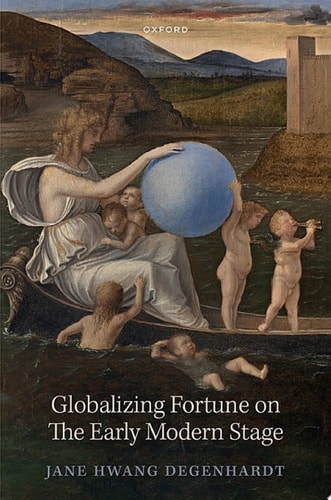
Globalizing Fortune on the Early Modern Stage
0
0
As an Amazon Associate and affiliate partner, Menrva Books earns from qualifying purchases. Learn more
Author Description
How were understandings of chance, luck, and fortune affected by early capitalist developments such as the global expansion of English trade and colonial exploration? And how could the recognition that fortune wielded a powerful force in the world be squared with Protestant beliefs about the all-controlling hand of divine providence? Was everything pre-determined, or was there room for chance and human agency? Globalizing Fortune addresses these questions by demonstrating how English economic expansion and global transformation produced a new philosophy of fortune oriented around discerning and optimizing unexpected opportunities. The popular theater played an influential role in dramatizing the new prospects and dangers opened up by nascent global economics and fostering a set of ethical practices for engaging with fortunes unpredictable turns. While largely derided as a sinful, earthly distraction in the Boethian tradition of the Middle Ages, fortune made a comeback on the English Renaissance stage as a force associated with valiant risks, ennobling adventures, and purposeful action. The early modern stage also reveals how a new philosophy of fortune led to economic exploitation and racialized exclusions. Offering in-depth discussions of plays by Shakespeare, Marlowe, Heywood, Dekker, and others, Globalizing Fortune demonstrates how the history of the English commercial theaterlike that of English seaborne expansionwas also a history of fortune. The public theater not only shaped popular understandings of fortunes role in a culture undergoing economic transformation, but also addressed this transformation from a unique position because of its own implication in London commerce, its reliance on paying customers, and its vulnerability to the risks and contingencies of live performance. Drawing attention to an archive of plays dramatizing maritime travel, trade, and adventure, this book shows how the popular stage shaped evolving understandings of fortune by cultivat
Menrva's Summary
THE THESIS
This book investigates how the expansion of English global trade and early capitalism fundamentally altered cultural perceptions of fortune, luck, and divine providence during the Renaissance. Jane Hwang Degenhardt, a scholar of early modern literature, utilizes a framework that bridges economic history and theatrical analysis. She argues that the English public theater served as a critical site for negotiating the tension between traditional theological beliefs in divine control and the emerging reality of risk-based commercial enterprise.
THE SCOPE MAP
What You Will Find
- Analysis of plays by Shakespeare, Marlowe, Heywood, and Dekker.
- Examination of the intersection between maritime trade, colonial expansion, and theatrical production.
- Exploration of how the concept of fortune shifted from a medieval moral hazard to a modern tool for risk management.
Scope Limits
- The study focuses primarily on the English commercial theater and does not provide an exhaustive survey of continental European drama.
- It does not offer a comprehensive economic history of the period, but rather focuses on the cultural and philosophical reception of economic change.
THE AUTHORITY PERSPECTIVE
Scholars in the field of early modern studies recognize this work as a significant contribution to understanding the relationship between the rise of global capitalism and the evolution of dramatic themes. Readers frequently note the academic density of the prose, which is well-suited for researchers and students of Renaissance literature and economic history.
Page Count:
442
Publication Date:
2022-01-01
Publisher:
OUP Oxford
ISBN-10:
0192638173
ISBN-13:
9780192638175
Early Modern
Theater History
English literature
English & College Success
English
Cultural History
Literary Criticism
Economic History
Community Tags
Other Editions(2)

Similar Books





Reader Comments
Share Your Thoughts
No comments yet. Be the first to share your thoughts!