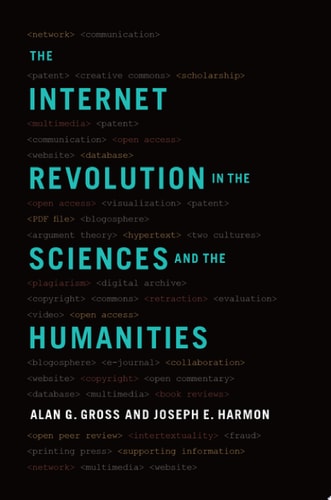
The Internet Revolution in the Sciences and Humanities
0
0
As an Amazon Associate and affiliate partner, Menrva Books earns from qualifying purchases. Learn more
Author Description
The Internet Revolution in the Sciences and Humanities takes a new look at C.P. Snow's distinction between the two cultures, a distinction that provides the driving force for a book that contends that the Internet revolution has sown the seeds for transformative changes in both the sciences and the humanities. It is because of this common situation that the humanities can learn from the sciences, as well as the sciences from the humanities, in matters central to both: generating, evaluating, and communicating knowledge on the Internet. In a succession of chapters, the authors deal with the state of the art in web-based journal articles and books, web sites, peer review, and post-publication review. In the final chapter, they address the obstacles the academy and scientific organizations face in taking full advantage of the Internet: outmoded tenure and promotion procedures, the cost of open access, and restrictive patent and copyright law. They also argue that overcoming these obstacles does not require revolutionary institutional change. In their view, change must be incremental, making use of the powers and prerogatives scientific and academic organizations already have.
Menrva's Summary
THE THESIS
This book investigates how the Internet revolution serves as a catalyst for transformative changes in the generation, evaluation, and communication of knowledge across both the sciences and the humanities. Alan G. Gross and Joseph E. Harmon, both established scholars in the rhetoric of science, utilize their expertise to bridge the divide between C.P. Snow’s two cultures. They argue that by adopting shared digital practices, both fields can improve their scholarly output and address systemic institutional challenges.
THE SCOPE MAP
What You Will Find
- Analysis of web-based journal articles and digital monographs
- Evaluation of peer review and post-publication review mechanisms
- Examination of institutional barriers including tenure and promotion policies
- Discussion on open access, patent law, and copyright restrictions
Scope Limits
- Does not propose radical institutional restructuring or revolutionary organizational overhauls
- Focuses primarily on academic and scientific environments rather than general consumer internet usage
THE AUTHORITY PERSPECTIVE
Scholars in the field of digital communication and science studies frequently cite this work for its pragmatic approach to institutional reform. Experts highlight the text as a balanced resource for understanding the intersection of traditional academic rigor and modern digital dissemination methods.
Page Count:
270
Publication Date:
2016-01-01
Publisher:
Oxford University Press
ISBN-10:
0190625422
ISBN-13:
9780190625429
Technology
Information Science
Communication
Communications
Sociology of Science
Academic
Introduction to Human Communication
Community Tags
Similar Books