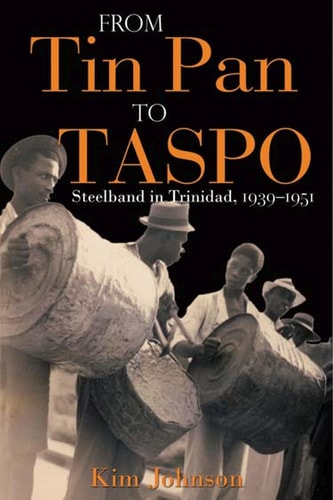
From Tin Pan to TASPO: Steelband in Trinidad, 1939-1951
0
0
As an Amazon Associate and affiliate partner, Menrva Books earns from qualifying purchases. Learn more
Author Description
From its first appearance in 1939 with a group of men knocking on pots and pans to the 1951 Trinidad All-Steel Percussion Orchestra (TASPO), steelband has fascinated the world. Relying largely on oral histories, this work investigates and documents the different technical, musical and organizational steps by which the steelband movement was born and grew to maturity. This study is a radical break with the approach to cultural creativity in general and music of the African diaspora in particular, emphasizing the role of individual agency, microsociology and aesthetic values. This contrasts with the "resistance" school of thought, which views music as an automatic reaction to oppression rather than a deliberate attempt to satisfy aesthetic needs and impulses. The minute biographical and psychological details provide a unique theory of creolization and chart its relationship to African retentions, based on empirical data. This authoritative study will appeal to both the general reader interested in the origins of steelband and to scholars concerned with the creolization of African and European cultures and Caribbean creativity.
Menrva's Summary
THE THESIS
This book investigates the formative years of the steelband movement in Trinidad, tracing its evolution from rudimentary beginnings to the establishment of the Trinidad All-Steel Percussion Orchestra (TASPO). It delves into the technical, musical, and organizational advancements that shaped the steelband's growth, drawing heavily on oral histories. The study challenges prevailing
THE SCOPE MAP
- The origins of steelband from 1939 with improvised instruments to the formation of TASPO in 1951.
- Technical, musical, and organizational developments within the steelband movement.
- The use of oral histories as a primary source for documenting the movement's evolution.
- An analysis of cultural creativity, emphasizing individual agency and aesthetic values over resistance theory.
- A new theory of creolization and its connection to African retentions, supported by empirical data.
- Biographical and psychological details of key figures in the steelband's development.
- The interplay between African and European cultural influences in Caribbean creativity.
THE AUTHORITY PERSPECTIVE
This authoritative study is positioned to appeal to both general readers interested in the origins of steelband and scholars of cultural history and the African diaspora. The work's emphasis on individual agency and aesthetic values offers a distinct perspective on cultural creativity, contrasting with theories focused solely on resistance. By integrating minute biographical and psychological details with empirical data, it aims to provide a unique theory of creolization. The book is expected to be a valuable resource for understanding Caribbean creativity and the evolution of African and European cultural fusions.
Page Count:
350
Publication Date:
2011-01-01
Publisher:
University of the West Indies Press
ISBN-10:
976640254X
ISBN-13:
9789766402549
History
Non-Fiction
Music History
Caribbean Studies
Cultural History
Community Tags
Similar Books