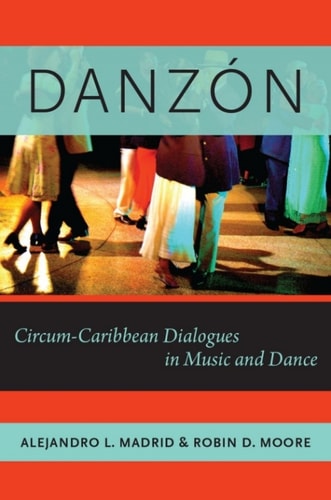
Danzón: Circum-Caribbean Dialogues in Music and Dance
0
0
As an Amazon Associate and affiliate partner, Menrva Books earns from qualifying purchases. Learn more
Author Description
Initially branching out of the European contradance tradition, the danzón first emerged as a distinct form of music and dance among black performers in nineteenth-century Cuba. By the early twentieth-century, it had exploded in popularity throughout the Gulf of Mexico and Caribbean basin. A fundamentally hybrid music and dance complex, it reflects the fusion of European and African elements and had a strong influence on the development of later Latin dance traditions as well as early jazz in New Orleans. Danzón: Circum-Caribbean Dialogues in Music and Dance studies the emergence, hemisphere-wide influence, and historical and contemporary significance of this music and dance phenomenon. Co-authors Alejandro L. Madrid and Robin D. Moore take an ethnomusicological, historical, and critical approach to the processes of appropriation of the danzón in new contexts, its changing meanings over time, and its relationship to other musical forms. Delving into its long history of controversial popularization, stylistic development, glorification, decay, and rebirth in a continuous transnational dialogue between Cuba and Mexico as well as New Orleans, the authors explore the production, consumption, and transformation of this Afro-diasporic performance complex in relation to global and local ideological discourses. By focusing on interactions across this entire region as well as specific local scenes, Madrid and Moore underscore the extent of cultural movement and exchange within the Americas during the late nineteenth and early twentieth-centuries, and are thereby able to analyze the danzón, the dance scenes it has generated, and the various discourses of identification surrounding it as elements in broader regional processes. Danzón is a significant addition to the literature on Latin American music, dance, and expressive culture; it is essential reading for scholars, students, and fans of this music alike.
Menrva's Summary
THE THESIS
How did the danzón evolve from a localized nineteenth-century Cuban dance form into a transnational musical phenomenon that shaped cultural identity across the Gulf of Mexico and the Caribbean? Alejandro L. Madrid and Robin D. Moore, both established scholars in ethnomusicology and Latin American studies, utilize a multidisciplinary framework to examine the danzón. By synthesizing historical archival research with critical cultural analysis, they argue that the genre serves as a primary site for understanding Afro-diasporic performance, regional ideological exchange, and the complex processes of musical appropriation.
THE SCOPE MAP
What You Will Find
- Historical analysis of the danzón's origins in European contradance and its subsequent fusion with African rhythmic traditions.
- Examination of the transnational dialogue between Cuba, Mexico, and New Orleans.
- Case studies on the social and political discourses surrounding the performance, consumption, and transformation of the dance.
- Theoretical frameworks for understanding the role of music in shaping regional identity and cultural movement.
THE AUTHORITY PERSPECTIVE
Scholars and musicologists recognize this work as a foundational text for understanding the intersection of dance, music, and transnational history in the Americas. Readers frequently note the academic density of the prose, which provides a rigorous and comprehensive analysis of the danzón's enduring cultural significance.
Page Count:
300
Publication Date:
2013-01-01
Publisher:
Oxford University Press
ISBN-10:
0199965811
ISBN-13:
9780199965816
Music
Criticism history
Humanities
Dance
Caribbean Studies
Cultural History
Community Tags
Other Editions(2)
Similar Books
Reader Comments
Share Your Thoughts
No comments yet. Be the first to share your thoughts!