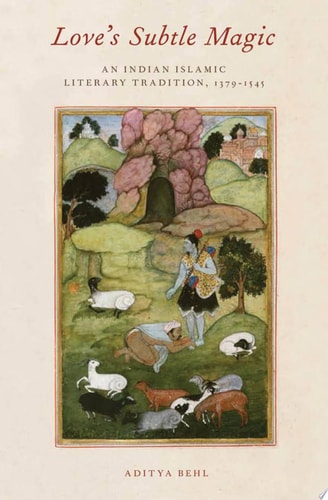
Love's Subtle Magic
0
0
As an Amazon Associate and affiliate partner, Menrva Books earns from qualifying purchases. Learn more
Author Description
The Encounter Between Muslim And Hindu Remains One Of The Defining Issues Of South Asian Society Today. It Began As Early As The 8th Century, And The First Muslim Kingdom In India, The Sultanate Of Delhi, Was Established At The End Of The 12th Century. This Power Eventually Reduced To Vassalage Almost Every Independent Kingdom On The Subcontinent. In Love's Subtle Magic, A Remarkable And Highly Original Book, Aditya Behl Uses A Little-understood Genre Of Sufi Literature To Paint An Entirely New Picture Of The Evolution Of Indian Culture During The Earliest Period Of Muslim Domination. These Curious Romantic Tales Transmit A Profound Religious Message Through The Medium Of Adventurous Stories Of Love. Although Composed In The Muslim Courts, They Are Written In A Vernacular Indian Language And Involve Hindu Yogis, Hindu Princes And Princesses, And Hindu Gods. Until Now, They Have Defied Analysis. Behl Shows That The Sufi Authors Of These Charming Tales Sought To Convey An Islamic Vision Via An Indian Idiom. They Thus Constitute The Earliest Attempt At The Indigenization Of Islamic Literature In An Indian Setting. More Important, However, Behl's Analysis Brilliantly Illuminates The Cosmopolitan And Composite Culture Of The Sultanate India In Which They Were Composed. This In Turn Compels Us Completely To Rethink The Standard Of The Opposition Between Indian Hindu And Foreign Muslim And Recognize That The Indo-islamic Culture Of This Era Was Already Significantly Indian In Many Important Ways.
Menrva's Summary
THE THESIS
How did the intersection of Islamic religious vision and Indian vernacular literary traditions shape the cultural identity of the Delhi Sultanate? Aditya Behl, a scholar of South Asian literature, examines a neglected genre of Sufi romantic tales to argue that these texts represent an intentional synthesis of Islamic theology and Indian cultural idioms. By analyzing these narratives, Behl challenges the binary opposition between Hindu and Muslim identities, proposing instead a model of a deeply integrated, cosmopolitan Indo-Islamic culture.
THE SCOPE MAP
What You Will Find
- Analysis of early Sufi romantic literature written in vernacular Indian languages.
- Examination of the Sultanate of Delhi's socio-political landscape from the 12th century onward.
- A framework for understanding the indigenization of Islamic literary forms in South Asia.
Scope Limits
- The study focuses primarily on specific Sufi courtly tales rather than a comprehensive history of all Sultanate-era literature.
- The analysis does not cover the later Mughal period or the subsequent evolution of these specific literary genres in modern times.
THE AUTHORITY PERSPECTIVE
Scholars and historians frequently cite this work as a critical intervention in the study of Indo-Islamic cultural history. Readers note the academic density of the prose, which effectively bridges the gap between literary analysis and historical inquiry.
Page Count:
416
Publication Date:
2016-01-01
Publisher:
Oxford University Press
ISBN-10:
0190628812
ISBN-13:
9780190628819
History
Religion
Asian Studies
Sufism
Literary Criticism
Community Tags
Similar Books