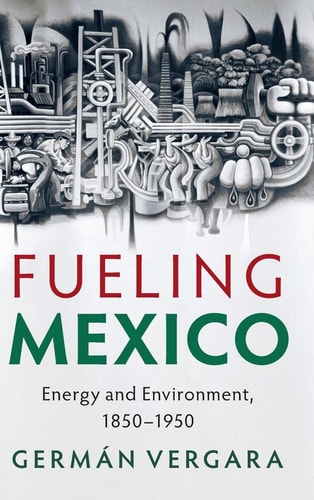
Fueling Mexico: Energy and Environment, 1850–1950
0
0
As an Amazon Associate and affiliate partner, Menrva Books earns from qualifying purchases. Learn more
Author Description
Introduction Energy, Environment, and History "It was the best of times, it was the worst of times... " Charles Dickens, A Tale of Two Cities Picture Mexico in 1850. The majority of Mexicans lived in villages, practiced some form of agriculture and animal husbandry: slash and burn in the tropical lowlands; rain-fed agriculture in the temperate central highlands and the Bajío;1 and a mix of ranching and limited irrigation in the arid north. Humans and animals powered every stage of food production. Urban centers were small, few, and far between. Of the country's seven and a half million people, no more than one in twenty lived in a city. Trade and travel depended on human and animal muscle power. Manufacturing took place in small urban workshops or river-powered factories. Like other agrarian societies, population and economic growth were slow and subject to periodic declines. Despite enormous disparities between regions, classes, genders, and races, all mid-nineteenth-century Mexicans lived in a world of low energy consumption where life's necessities came from the land. But pre-industrial Mexico was not a paradise of plenty, nor did its people live in harmony with their surroundings. Deforestation, pollution, and environmental degradation were common but largely limited to specific areas like mining regions"
Menrva's Summary
THE THESIS
This book investigates the intricate relationship between energy consumption and environmental change in Mexico during a pivotal century of transformation. The author, Germán Vergara, draws upon historical data and analysis to explore how Mexico's energy landscape evolved from agrarian, muscle-powered systems in 1850 to more industrialized forms by 1950. The work examines the environmental consequences of this shift, including deforestation and pollution, and situates these changes within the broader social, economic, and political context of the nation.
THE SCOPE MAP
- An examination of Mexico's energy consumption patterns from 1850 to 1950.
- Analysis of the environmental impacts of energy use, such as deforestation and pollution.
- Exploration of the socio-economic and political factors influencing energy and environmental policies.
- Case studies of specific regions and industries within Mexico.
- Discussion of the transition from agrarian, muscle-powered economies to more industrialized ones.
- Historical context of Mexico's development during the 19th and early 20th centuries.
THE AUTHORITY PERSPECTIVE
The book offers a detailed historical account of Mexico's energy and environmental trajectory over a century of significant change. Its focus on the interplay between resource use and ecological impact provides a crucial lens through which to understand the nation's development. The work is likely to appeal to scholars and students of Mexican history, environmental history, and energy studies, offering a comprehensive overview of a critical period.
Page Count:
300
Publication Date:
2021-06-24
Publisher:
Cambridge University Press
ISBN-10:
1108831273
ISBN-13:
9781108831277
Non-Fiction
History
Energy
Environment
Mexico
Community Tags
Similar Books