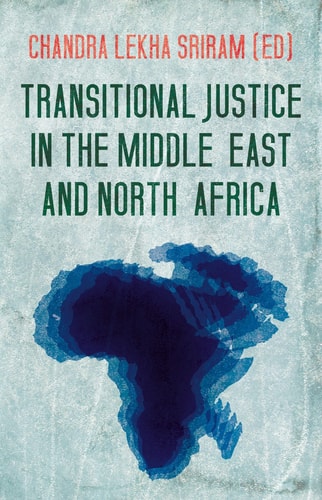
Transitional Justice in the Middle East and North Africa
0
0
As an Amazon Associate and affiliate partner, Menrva Books earns from qualifying purchases. Learn more
Author Description
Following the 'Arab Spring' uprisings in the Middle East and North Africa, many had high hopes not only for democratisation but also for transitional justice to address the myriad abuses that had taken place in the region, both during the uprisings and for decades prior to them. Protesters had called not only for removal of corrupt and abusive leaders, but also for the protection of human rights more generally, including socio-economic rights as well as civil and political rights. Despite these hopes, most of the transitions in the region have stalled, along with the possibility of transitional justice. This volume is the first to look at this process and brings together leading experts in the fields of human rights and transitional justice, and in the history, politics and justice systems of countries such as Egypt, Tunisia, Libya, Algeria, Bahrain and Morocco. While these countries have diverse histories, political institutions, and experiences with accountability, most have experienced non-transition, stalled transition, or political manipulation of transitional justice measures, highlighting the limits of such mechanisms. These studies should inform reflection not only on the role of transitional justice in the region, but also on challenges to its operation more generally.
Menrva's Summary
THE THESIS
This volume investigates why transitional justice mechanisms have largely failed or stalled in the Middle East and North Africa following the Arab Spring uprisings. Chandra Lekha Sriram, a scholar specializing in human rights and conflict resolution, compiles research from regional experts to analyze the intersection of political instability and accountability. The text argues that the unique political landscapes and institutional histories of these nations have hindered the implementation of justice, often resulting in the manipulation of legal processes rather than genuine reform.
THE SCOPE MAP
What You Will Find
- Comparative analysis of transitional justice efforts in Egypt, Tunisia, Libya, Algeria, Bahrain, and Morocco.
- Examination of the interplay between socio-economic rights and civil-political accountability.
- Assessment of the impact of non-transition and stalled political processes on human rights initiatives.
Scope Limits
- The text does not provide a universal blueprint for successful transitional justice implementation.
- It does not cover nations outside the Middle East and North Africa region.
THE AUTHORITY PERSPECTIVE
Experts recognize this volume as a foundational academic resource for understanding the specific challenges of accountability in post-uprising MENA states. Readers frequently note the scholarly density of the prose and the rigorous, evidence-based approach to regional political analysis.
Page Count:
336
Publication Date:
2017-02-15
Publisher:
Oxford University Press
ISBN-10:
0190628561
ISBN-13:
9780190628567
History
Middle Eastern
Transitional Justice
International relations
Human rights
Law africa
Community Tags
Similar Books