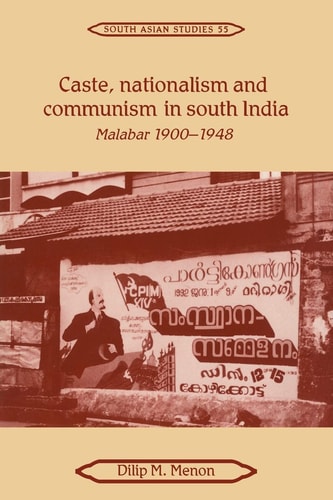
Caste, Nationalism and Communism in South India: Malabar 1900-1948
0
0
As an Amazon Associate and affiliate partner, Menrva Books earns from qualifying purchases. Learn more
Author Description
In 1957, Kerala became the first region in Asia to elect a communist government parliamentary procedure. Dilip Menon's book traces the social history of comunism in Malabar, the bastion of the movement, and looks at how the ideology was transformed into a doctrine of caste equality, as national strategies were reshaped by local circumstance and tinged by pragmatism. While existing literature concentrates on the intricacies of party policy, Dilip Menon explores the diversity of political practice within a particular region. He particularly analyses the relationship between landowners and cultivators, demonstrating their economic and cultural interdependence. Inequality and difference were tempered by a perception of shared symbols and values. As the author points out, the success of communism in Kerala lies in its recognition of this fact.
Menrva's Summary
THE THESIS
This book investigates the complex interplay of caste, nationalism, and communism in the South Indian region of Malabar between 1900 and 1948. Dilip Menon's work examines how communist ideology was adapted and transformed within the specific social and historical context of Malabar, a region central to the communist movement in India. The analysis focuses on the practical application of communist ideals, particularly in relation to caste equality, and how national strategies were modified by local circumstances and pragmatic considerations. The book delves into the economic and cultural interdependence between landowners and cultivators, highlighting how shared symbols and values tempered inherent inequalities and differences, which the author posits as a key factor in the success of communism in Kerala.
THE SCOPE MAP
- The social history of communism in Malabar from 1900 to 1948.
- Analysis of how communist ideology was transformed into a doctrine of caste equality.
- Exploration of the reshaping of national strategies by local circumstances and pragmatism.
- Examination of the diversity of political practice within a specific region, moving beyond party policy.
- Detailed analysis of the relationship between landowners and cultivators, including their economic and cultural interdependence.
- Discussion of how inequality and difference were tempered by shared symbols and values.
- An argument for the recognition of shared symbols and values as a key factor in the success of communism in Kerala.
THE AUTHORITY PERSPECTIVE
The book is recognized for its detailed examination of the social history of communism in Malabar, moving beyond traditional analyses of party policy to explore regional political practices. It is noted for its focus on the transformation of communist ideology into a doctrine of caste equality, shaped by local circumstances and pragmatism. The analysis of the landowner-cultivator relationship and the role of shared symbols in tempering inequality is a significant contribution. The author's argument regarding the recognition of shared values as crucial to communism's success in Kerala provides a nuanced perspective on the movement's historical development.
Page Count:
232
Publication Date:
2007-12-03
Publisher:
Cambridge University Press
ISBN-10:
0521051959
ISBN-13:
9780521051958
Non-Fiction
Politics
History
Social History
Community Tags
Other Editions(2)

Similar Books