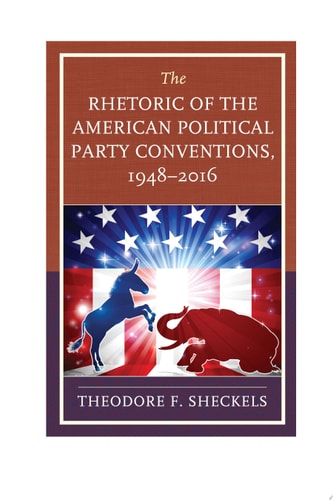
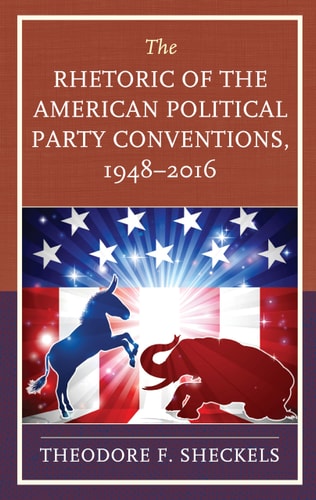
The Rhetoric of the American Political Party Conventions, 1948-2016
0
0
As an Amazon Associate and affiliate partner, Menrva Books earns from qualifying purchases. Learn more
Author Description
The Rhetoric of the American Political Party Conventions, 1948-2016 establishes the rhetorical goals of the thirty-six political party conventions that have taken place since 1948 against the backdrop of the fundamental changes that television brought to the conventions. Theodore F. Sheckels analyzes these conventions to determine whether the gatherings met or failed to meet those goals, including addressing civil rights, unifying divergent wings of the party, celebrating the triumph of a single wing, overcoming dissent inside and outside the meeting hall, overcoming—or capitalizing on—scandal, reconstituting the party after defeats, arguing for change, and advocating for inclusion. Sheckels observes that although speeches are the primary vehicle through which attendees strive to reach these goals, the crucial addresses are not always by the principal players; often, events other than speeches such as negotiations, demonstrations, and media spin can be just as consequential. Sheckels discusses both the similarities and differences in the ways in which the conventions do business and constitute and reconstitute what the political parties are, aiming to persuade the public with rhetorical images and messages. Scholars of communication, rhetoric, political science, and American studies will find this book particularly useful.
Menrva's Summary
THE THESIS
This book analyzes the rhetorical strategies employed in American political party conventions from 1948 to 2016, examining their effectiveness in achieving specific goals amidst the evolving media landscape. Theodore F. Sheckels investigates thirty-six conventions, assessing whether they met objectives such as addressing civil rights, unifying party factions, overcoming dissent, managing scandals, and advocating for inclusion. The analysis considers not only speeches but also other consequential events like negotiations, demonstrations, and media spin. It explores how conventions shape party identity and persuade the public through rhetorical imagery and messaging, highlighting both similarities and differences in their operations over time.**
THE SCOPE MAP
- Analysis of rhetorical goals set by American political party conventions from 1948 to 2016.
- Examination of the impact of television on convention rhetoric and strategy.
- Assessment of convention success in addressing key issues like civil rights and party unity.
- Identification of how conventions handle internal dissent, scandal, and post-defeat reconstitution.
- Discussion of the role of speeches, negotiations, demonstrations, and media spin in convention outcomes.
- Exploration of how parties constitute and reconstitute their identities through convention rhetoric.
- Analysis of persuasive rhetorical images and messages aimed at the public.
- Comparative study of convention business and rhetorical approaches across different eras.
THE AUTHORITY PERSPECTIVE
Scholars of communication, rhetoric, political science, and American studies will find this book particularly useful. The work provides a detailed historical and analytical framework for understanding the evolution of political communication. By examining specific rhetorical goals and the various means used to achieve them, the book offers insights into the strategic nature of party conventions. It highlights the dynamic interplay between formal speeches and other influential convention activities in shaping public perception and party identity.
Page Count:
245
Publication Date:
2020-10-13
Publisher:
Bloomsbury Publishing
ISBN-10:
1978751060
ISBN-13:
9781978751064
History
Non-Fiction
Communication Studies
American Studies
Rhetoric
Community Tags
Other Editions(3)
Similar Books