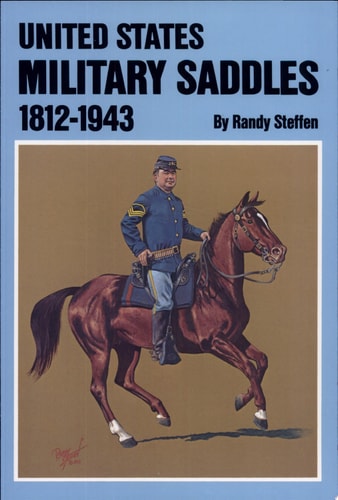
United States Military Saddles, 1812-1943
0
0
As an Amazon Associate and affiliate partner, Menrva Books earns from qualifying purchases. Learn more
Author Description
A large part of American history was written from the seat of a military saddle. While the United States Army used horse-mounted fighting men from the very beginning, it was in the nineteenth century - from the decade before the Mexican War through the Indian wars - that the dashing cavalry units captured the American imagination. The horse solders remained part of the army until 1943, when the military converted them to mechanized forces. Even so, West Point did not tear down its stables and abandon its riding-proficiency requirement until 1947. The long retention of the cavalry was due to affection for the memory of the glorious role of the cavalry in American military history.
Menrva's Summary
THE THESIS
This book chronicles the evolution and significance of military saddles used by the United States Army from 1812 to 1943. It details the historical context of cavalry units, their capture of the American imagination from the mid-nineteenth century through the Indian Wars, and their eventual transition to mechanized forces in 1943, while noting the continued retention of cavalry traditions at West Point until 1947. The work explores the deep affection for the cavalry's glorious role in American military history as a reason for its prolonged use.
THE SCOPE MAP
- Detailed examination of military saddle designs and their development across various eras.
- Historical context of cavalry's role in American conflicts, including the Mexican War and Indian Wars.
- The transition from horse-mounted cavalry to mechanized forces.
- The cultural and historical significance of cavalry in the American imagination.
- Information on West Point's equestrian traditions and their eventual discontinuation.
THE AUTHORITY PERSPECTIVE
The book is recognized for its detailed exploration of a specific, yet historically significant, aspect of military equipment and its connection to American history. It is likely to be appreciated by historians, reenactors, and enthusiasts of military horsemanship for its focus on the evolution of the saddle and the enduring legacy of the cavalry. The work provides a comprehensive look at the equipment that was central to the cavalry's operations and its symbolic importance.
Page Count:
176
Publication Date:
1988-09-01
Publisher:
University of Oklahoma Press
ISBN-10:
0806121025
ISBN-13:
9780806121024
History
Non-Fiction
Military History
Cavalry
Equipment
American History
Community Tags
Other Editions(2)
Similar Books














