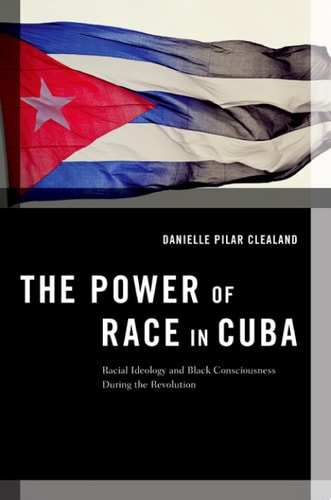
The Power of Race in Cuba: Racial Ideology and Black Consciousness During the Revolution
0
0
As an Amazon Associate and affiliate partner, Menrva Books earns from qualifying purchases. Learn more
Author Description
By Promoting An Anti-discrimination Ethos, Diminishing Class Differences At The Onset Of The Revolution, And Declaring The End Of Racism, Castro Was Able To Unite Belief In The Revolution To Belief In The Erasure Of Racism. The Ideology Is Bolstered By Rhetoric That Discourages Racial Affirmation. The Author Examines Public Opinion On Race In Cuba, Particularly Among Black Cubans. She Examines How Black Cubans Have Indeed Embraced The Dominant Nationalist Ideology That Eschews Racial Affirmation, But Also Continue To Create Spaces For Black Consciousness That Challenge This Ideology. Todos Somos Cubanos: How Racial Democracy Works In Cuba -- De Aqui Pa'l Cielo: Black Consciousness And Racial Critique -- Marti's Cuba: Racial Ideology And Black Consciousness Before 1959 -- Institutionalizing Ideology: Race And The Cuban Revolution -- There Is No Racism Here: Anti-racialism And White Racial Attitudes -- The Power Of A Frame: The Characterization Of Racism As Prejudice -- Todos Somos Cubanos, Pero No Todos Somos Iguales: How Racism Works In Cuba -- Uncovering Blackness And The Underground: Black Consciousness -- The Seeds Of A Black Movement? Racial Organizing And The Above-ground Movement. Danielle Pilar Clealand. Includes Bibliographical References And Index.
Menrva's Summary
THE THESIS
This book investigates how the Cuban revolutionary state’s official ideology of racial erasure interacts with the lived experiences and consciousness of Black Cubans. Danielle Pilar Clealand, a scholar of political science, utilizes a combination of public opinion data, historical analysis, and qualitative research to examine the tension between state-mandated national unity and the persistence of racial identity. The work argues that while the revolutionary government successfully promoted an anti-discrimination ethos that discourages racial affirmation, Black Cubans simultaneously navigate this framework while fostering independent spaces for racial consciousness.
THE SCOPE MAP
What You Will Find
- Analysis of Cuban racial ideology from the pre-1959 era to the present.
- Examination of the institutionalization of anti-racialism within the Cuban state.
- Evaluation of public opinion data regarding racial attitudes among Black and white Cubans.
Scope Limits
- The text focuses primarily on the ideological and social dimensions of race rather than an exhaustive economic history of the revolution.
- It does not provide a comprehensive biography of political figures, focusing instead on broader societal structures.
THE AUTHORITY PERSPECTIVE
Scholars in Latin American studies identify this work as a significant contribution to understanding the complexities of racial democracy in the Caribbean. Readers frequently note the academic rigor of the research and the clarity with which the author dissects the paradox of state-sponsored racial erasure.
Page Count:
0
Publication Date:
1900-01-01
Publisher:
Oxford University Press,
ISBN-10:
019063233X
ISBN-13:
9780190632335
History
Sociology
Race Relations
American Studies
Cuba
Black people
Community Tags
Similar Books