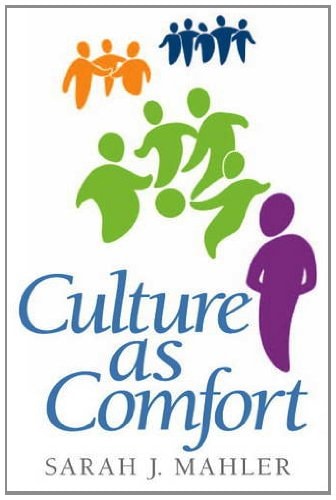
Culture as Comfort
0
0
As an Amazon Associate and affiliate partner, Menrva Books earns from qualifying purchases. Learn more
Author Description
Presents culture and identities as continual processes of doing, rather than as things people possess.This text encourages readers to understand how we learn culture so early in life that we come to view “it” as a possession more than as our groups’ particular ways of thinking and doing. We do the same for “identities” such as gender, race, nationality, and religion because these are also learned. Moreover, as we become culturally competent as children, we do not see what we do as cultural but as natural, as normal. Therefore our ways become comforting to us yet often discomforting to others and vice-versa. The author’s goals are to encourage readers to understand how we acquire our cultural comfort zones so that we can expand them throughout life and to appreciate cultural diversity and similarity.Culture as Comfort is a unique learning tool that is written broadly to appeal to a wide, cross-disciplinary audience. It is not a typical textbook, nor is it a classic supplemental text. Instead, it addresses a critical scholarly concept–culture–using the latest multidisciplinary scholarship. It renders the information in nontechnical language, adding in the author’s own insights and stories to make the information enjoyable and easy for readers to comprehend and remember.Learning GoalsUpon completing this book readers will be able to: Understand culture and identities as ongoing processes of learning patterns of thinking and doing, rather than as things we possess Comprehend how learning to be culturally competent involves feeling culturally comfortable among people with whom we share culture and discomforted with those different from ourselves Recognize that we can expand our cultural comfort zones if we embrace cultural discomforts as opportunities to continue to learn culture Apply the book’s ideas to creatively solve cultural problems in their home, school, and work lives
Menrva's Summary
THE THESIS
This book investigates the core question of how culture and identity are acquired as lifelong processes of learning rather than static possessions. Sarah J. Mahler, an anthropologist, utilizes multidisciplinary scholarship to challenge the assumption that our cultural norms are natural or innate. She argues that by recognizing how we develop 'cultural comfort zones' early in life, individuals can actively expand their perspectives to better navigate and appreciate human diversity.
THE SCOPE MAP
What You Will Find
- A framework for understanding culture as a dynamic, ongoing practice of 'doing' rather than a fixed trait.
- Analysis of how identities like race, gender, and religion are socially learned and internalized.
- Personal anecdotes and narrative insights used to bridge complex scholarly concepts with everyday experience.
- Practical strategies for applying cultural awareness to resolve conflicts in professional and personal environments.
THE AUTHORITY PERSPECTIVE
The text is regarded as an accessible, cross-disciplinary introduction that successfully avoids dense academic jargon while maintaining scholarly rigor. Its focus on the psychological and social mechanics of 'comfort' provides a clear, actionable methodology for readers seeking to improve their intercultural competence.
Page Count:
160
Publication Date:
2012-08-31
Publisher:
Pearson
ISBN-10:
0205880002
ISBN-13:
9780205880003
Social Science
Identity politics
Anthropology
Sociology