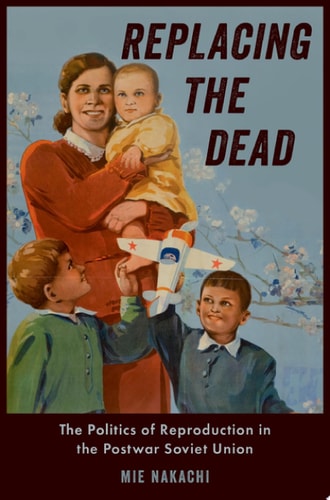
Replacing the Dead: The Politics of Reproduction in the Postwar Soviet Union
0
0
As an Amazon Associate and affiliate partner, Menrva Books earns from qualifying purchases. Learn more
Author Description
Drawing on never before used archival materials, Replacing the Dead exposes the history of Soviet and Russian abortion policy.It is not unusual for nations recovering from wars to incentivize their populations to raise their birthrates. The post-World War II Soviet pronatalism campaign attempted this on an unprecedented scale, aiming to replace a lost population of 27 million. Why, then, did the USSR re-legalize abortion in 1955? Mie Nakachi uses previously hidden archival data to reveal that decisions made by Stalin and Khruschev under the rubric of 'family law' created a society of broken marriages, “fatherless” children, and abortions, each totaling in the tens of millions. The government reversed laws regarding paternal responsibility, thereby encouraging men to impregnate unmarried women and widows, and blocked available contraception, overriding the advice of the medical establishment. Some 8.7 million out-of-wedlock children were born between 1945 and 1955 alone. In the absence of serious commitment to supporting Soviet women who worked full-time, the policy did extensive damage to gender relations and the welfare of women and children. Women, famous cultural figures, and Soviet professionals initiated a movement to improve women's reproductive health and make all children equal. Because Soviet leaders did not allow any major reform, an abortion culture grew among Soviet women and spread throughout the Soviet sphere, including Eastern Europe and China. Based on groundbreaking research, Replacing the Dead traces how the idea of women's right to an abortion emerged from an authoritarian society decades before it did in the West and why it remains the dominant method of birth control in present-day Russia.
Menrva's Summary
THE THESIS
This book investigates the historical origins and political motivations behind Soviet abortion policy in the post-World War II era. Mie Nakachi, a historian specializing in Soviet social policy, utilizes previously inaccessible archival materials to analyze how state-mandated pronatalism and the reversal of paternal responsibility laws shaped reproductive health outcomes. The work argues that the Soviet government's failure to support working women while simultaneously restricting contraception created a systemic reliance on abortion that persists in contemporary Russia.
THE SCOPE MAP
What You Will Find
- Analysis of Soviet family law reforms between 1945 and 1955
- Examination of the demographic impact of the post-WWII population replacement campaign
- Documentation of the state's rejection of medical advice regarding contraception
- Investigation into the social consequences for unmarried women and children
Scope Limits
- The study focuses primarily on the Soviet Union and its immediate sphere of influence
- The text does not provide a comprehensive history of Russian reproductive health beyond the post-Soviet transition
THE AUTHORITY PERSPECTIVE
Scholars recognize this work as a significant contribution to the understanding of Soviet social governance and gender relations. Readers frequently note the depth of the archival research and the clarity with which the author connects state policy to long-term societal trends.
Page Count:
343
Publication Date:
2020-01-01
Publisher:
Oxford University Press
ISBN-10:
0190635150
ISBN-13:
9780190635152
History
Medical
Social History
Allied Health
Soviet History
European History
Womens Studies
Reproductive Technology
Reproductive Rights
Community Tags
Similar Books