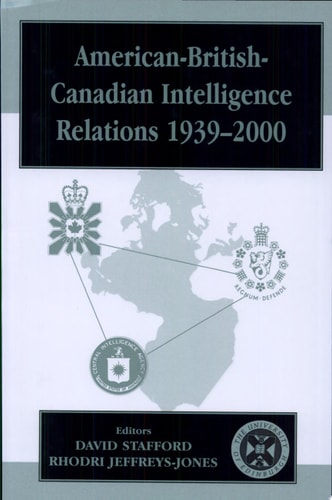
American-British-Canadian Intelligence Relations, 1939-2000
0
0
As an Amazon Associate and affiliate partner, Menrva Books earns from qualifying purchases. Learn more
Author Description
During the second half of the 20th century, intelligence co-operation between the three North Atlantic powers of America, Britain and Canada played a vital role in Western struggles against Nazi Germany, Imperial Japan, Soviet Russia and their lesser allies. As demonstrated in the case studies in this volume, World War II cemented loose and often informal inter-allied agreements on security intelligence that had preceded it, and created new and important areas of close and formal co-operation in such areas as codebreaking and foreign intelligence. But what was the true nature of this co-operation? Wartime myths have obscured much of the reality, and while the western powers undoubtedly benefited from the dividends of these agreements during the Cold War that followed, they also experienced restrictions on national sovereignty whose costs have often caused controversy, while the search for co-operation frequently provided cause for friction.
Menrva's Summary
THE THESIS
This volume investigates the complex and often contentious intelligence relationship between the United States, Britain, and Canada from the outbreak of World War II through the end of the Cold War. The book examines how wartime alliances forged in the fight against Axis powers evolved into formal and informal intelligence-sharing agreements, particularly in codebreaking and foreign intelligence. It explores the benefits derived from this cooperation during the Cold War, while also highlighting the inherent tensions, controversies over national sovereignty, and friction that arose from the pursuit of shared security objectives.
THE SCOPE MAP
- Analysis of intelligence cooperation between the US, UK, and Canada during World War II.
- Examination of the evolution of these relationships into formal agreements post-WWII.
- Case studies detailing specific areas of cooperation, such as codebreaking and foreign intelligence.
- Discussion of the impact of these agreements on national sovereignty and international relations.
- Exploration of the friction and controversies arising from intelligence sharing.
- Coverage of the period from 1939 to 2000, encompassing major global conflicts and geopolitical shifts.
THE AUTHORITY PERSPECTIVE
This collection of essays offers a detailed examination of the historical intelligence ties between three key North Atlantic powers. The contributors analyze the transition from informal wartime understandings to more structured post-war collaborations, highlighting both the strategic advantages and the political costs associated with such deep intelligence integration. The volume is likely to appeal to scholars and students of international relations, intelligence history, and 20th-century geopolitical studies, providing a nuanced perspective on a critical, yet often mythologized, aspect of Western security.
Page Count:
286
Publication Date:
2000-01-01
Publisher:
Psychology Press
ISBN-10:
0714651036
ISBN-13:
9780714651033
History
Non-Fiction
International relations
Cold War
Community Tags
Similar Books