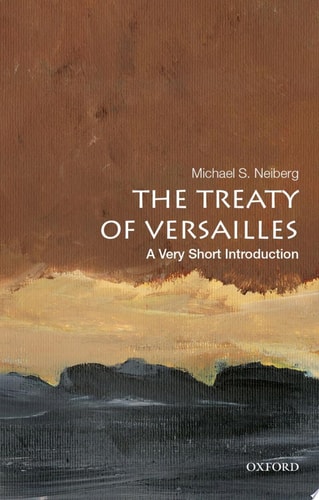
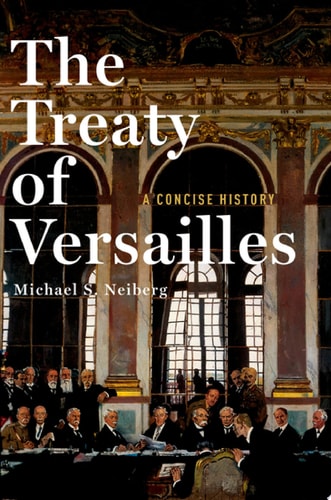
The Treaty Of Versailles: A Very Short Introduction
0
0
As an Amazon Associate and affiliate partner, Menrva Books earns from qualifying purchases. Learn more
Author Description
Signed on June 28, 1919 between Germany and the principal Allied powers, the Treaty of Versailles formally ended World War I. Problematic from the very beginning, even its contemporaries saw the treaty as a mediocre compromise, creating a precarious order in Europe and abroad and destined to fall short of ensuring lasting peace. At the time, observers read the treaty through competing lenses: a desire for peace after five years of disastrous war, demands for vengeance against Germany, the uncertain future of colonialism, and, most alarmingly, the emerging threat of Bolshevism. A century after its signing, we can look back at how those developments evolved through the twentieth century, evaluating the treaty and its consequences with unprecedented depth of perspective. The author of several award-winning books, Michael S. Neiberg provides a lucid and authoritative account of the Treaty of Versailles, explaining the enormous challenges facing those who tried to put the world back together after the global destruction of the World War I. Rather than assessing winners and losers, this compelling book analyzes the many subtle factors that influenced the treaty and the dominant, at times ambiguous role of the Big Four leaders: Woodrow Wilson of the United States, David Lloyd George of Great Britain, Vittorio Emanuele Orlando of Italy, and Georges Clémenceau of France. The Treaty of Versailles was not solely responsible for the catastrophic war that crippled Europe and the world just two decades later, but it played a critical role. As Neiberg reminds us, to understand decolonization, World War II, the Cold War, and even the complex world we inhabit today, there is no better place to begin than with World War I and the treaty that tried, and perhaps failed, to end it. About the series: The Very Short Introductions series from Oxford University Press contains hundreds of titles in almost every subject area. These pocket-sized books are the perfect way to get ahead in a new
Menrva's Summary
THE THESIS
This book investigates the complex diplomatic, political, and social factors that rendered the Treaty of Versailles a precarious compromise rather than a sustainable peace agreement. Michael S. Neiberg, a professor of history and expert in military studies, utilizes a century of historical hindsight to evaluate the treaty's immediate impact and its long-term role in shaping the twentieth century. He argues that the treaty was not solely responsible for subsequent global conflicts, but rather a critical component in a volatile international order that struggled to reconcile competing demands for vengeance, colonial stability, and security.
THE SCOPE MAP
What You Will Find
- Analysis of the Big Four leaders: Wilson, Lloyd George, Orlando, and Clémenceau.
- Examination of the geopolitical pressures including the threat of Bolshevism and the future of colonialism.
- Evaluation of the treaty's influence on the lead-up to World War II and the Cold War.
Scope Limits
- The text does not provide an exhaustive military history of World War I.
- It does not offer a comprehensive biography of the individual negotiators beyond their roles in the treaty process.
THE AUTHORITY PERSPECTIVE
Readers frequently note the accessibility and clarity of Neiberg's prose, which distills complex diplomatic history into a concise format. Experts highlight this work as a reliable entry point for students and general readers seeking to understand the foundational failures of the post-WWI international order.
Page Count:
160
Publication Date:
2019-01-01
Publisher:
Oxford University Press
ISBN-10:
0190644990
ISBN-13:
9780190644994
History
European History
International relations
World War
Diplomatic History
Community Tags
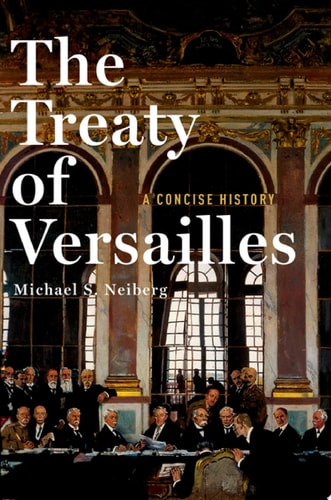
Other Editions(2)
Similar Books





Reader Comments
Share Your Thoughts
No comments yet. Be the first to share your thoughts!