Curtain of Lies
0
0
As an Amazon Associate and affiliate partner, Menrva Books earns from qualifying purchases. Learn more
Author Description
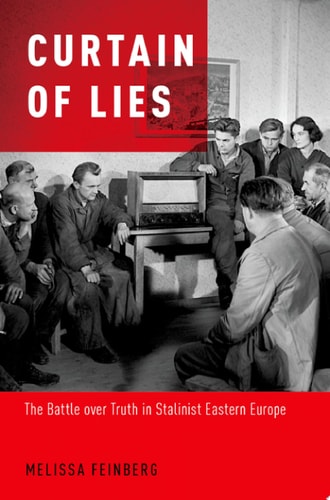
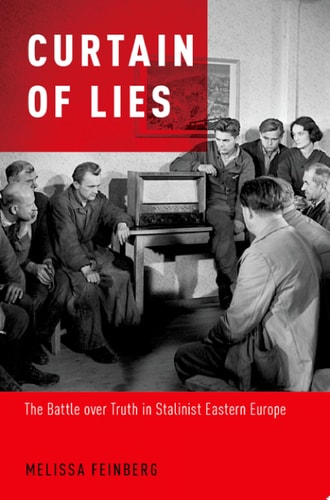
While The Cold War Governments Of Eastern Europe Operated Within The Confines Of The Soviet Worldview, Their Peoples Confronted The Narratives Of Both East And West. From The Soviet Union And Its Satellites, They Heard Of A West Dominated By Imperialist Warmongers And Of The Glorious Future Only Communism Could Bring. A Competing Discourse Emanated From The West, Claiming That Eastern Europe Was A Totalitarian Land Of Captive Slaves, Powerless In The Face Of Soviet Aggression. In Curtain Of Lies, Melissa Feinberg Conducts A Timely Examination Into The Nature Of Truth, Using The Political Culture Of Eastern Europe During The Cold War As Her Foundation. Focusing On The Period Between 1948 And 1956, She Looks At How The Truth Of Eastern Europe Was Delineated By Actors On Both Sides Of The Iron Curtain. Feinberg Offers A Fresh Interpretation Of The Cold War As A Shared Political Environment, Exploring The Ways In Which Ordinary East Europeans Interacted With These Competing Understandings Of Their Homeland. She Approaches This By Looking At The Relationship Between The American-sponsored Radio Stations Broadcast Across The Iron Curtain And The East European émigrés They Interviewed As Sources On Life Under Communism. Feinberg's Careful Analysis Reveals That These Parties Developed Mutually Reinforced Assumptions About The Meaning Of Communism, Helping To Create The Evidentiary Foundation For Totalitarian Interpretations Of Communist Rule In Eastern Europe. In Bridging The Geopolitical And The Individual, Curtain Of Lies Provides A Perspective That Is Both Innovative In Its Methodology And Indispensable To Its Field.
Menrva's Summary
THE THESIS
How did the competing narratives of the Cold War shape the understanding of life under Communist rule in Eastern Europe between 1948 and 1956? Melissa Feinberg, a historian specializing in Eastern European political culture, examines the intersection of geopolitical propaganda and individual experience. She argues that American-sponsored radio broadcasts and the testimonies of Eastern European émigrés created a feedback loop that solidified the Western interpretation of totalitarianism. By analyzing this exchange, Feinberg demonstrates how both sides constructed a shared, yet distorted, reality of the Communist bloc.
THE SCOPE MAP
What You Will Find
- Analysis of American-sponsored radio broadcasts directed at Eastern Europe.
- Examination of interviews with Eastern European émigrés during the early Cold War.
- A framework for understanding the construction of political truth in a polarized environment.
Scope Limits
- The study is strictly limited to the period between 1948 and 1956.
- The research focuses primarily on the interaction between Western media and émigré sources rather than internal domestic policy within the Soviet Union.
THE AUTHORITY PERSPECTIVE
Scholars in the field of Cold War history recognize this work for its innovative methodology in bridging geopolitical strategy with individual narrative. Readers frequently note the academic density of the prose and the meticulous archival research used to support the author's arguments.
Page Count:
240
Publication Date:
2017-01-01
Publisher:
Oxford University Press
ISBN-10:
0190644621
ISBN-13:
9780190644628
History
Communication Studies
Eastern Europe
Cold War
Community Tags
Similar Books