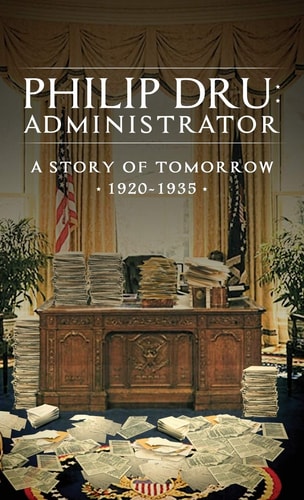
Philip Dru: Administrator
0
0
As an Amazon Associate and affiliate partner, Menrva Books earns from qualifying purchases. Learn more
Author Description
Col. Edward Mandell House tried to remain anonymous, but eventually his vision of America, as represented in his novel "Philip Dru: Administrator" became known. Why anonymous? Perhaps because it conveyed precisely what one of his critics said, "Suffice it to know Philip Dru is an autobiography of the colonel himself and solves the conundrum how to get rid of the Constitution." Given House's close working relationship with President Woodrow Wilson and Wilson's own strained relationship with the foundational document of the country, bravely testifying to one's actual views is manifestly politically unwise. Especially when that vision cheers on a progressive-led civil war in America to root out and destroy completely the rugged 'reactionary' revolutionists preventing the arrival of The Administrative State: Utopia. In view of continued progressive disdain for ordinary Americans and the Constitution--which stands in their way today, as it stood in Wilson's way--"Philip Dru: Administrator" provides an important glimpse into the Bureaucratic mind, free from constraints, and allowed to dream big. May it never be free from constraints.
Menrva's Summary
THE PULSE
A powerful political operative envisions a radical transformation of America through civil war and the establishment of an administrative state. The protagonist, Philip Dru, seeks to dismantle the existing constitutional order and eradicate 'reactionary' elements to usher in a utopian society. He faces opposition from those who uphold the current system and resist his progressive ideals. The narrative framework appears to be that of a political allegory, reflecting the author's own views on governance and societal change.
INSIDE THE PAGES
- Exploration of an idealized 'Administrative State' as a form of utopia.
- Depiction of a progressive-led civil war to achieve political aims.
- Critique of the U.S. Constitution and its perceived obstruction of progress.
- Autobiographical elements reflecting the author's political philosophy.
- Themes of political maneuvering and societal restructuring.
- A vision of future America shaped by administrative control.
- The concept of rooting out and destroying 'reactionary' opposition.
THE COLLECTIVE ECHO
Philip Dru: Administrator is often viewed as a significant, albeit controversial, work reflecting early 20th-century progressive political thought and its more radical underpinnings. Critics have noted its prescient, if disturbing, vision of an administrative state achieved through forceful means, drawing parallels between the novel's themes and later political developments. The book's autobiographical nature, as suggested by its reception, allows for an examination of the author's personal political philosophy and his critique of existing governmental structures. Its enduring relevance lies in its stark portrayal of unchecked bureaucratic ambition and its potential consequences.
Page Count:
144
Publication Date:
2019-11-19
Publisher:
Suzeteo Enterprises
ISBN-10:
164594039X
ISBN-13:
9781645940395
Fiction
Science Fiction
Dystopian
Historical Fiction
American
Utopian
Political fiction
Community Tags
Similar Books