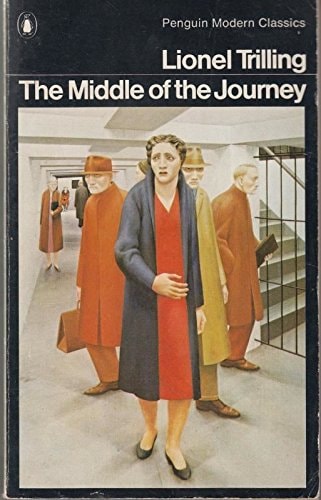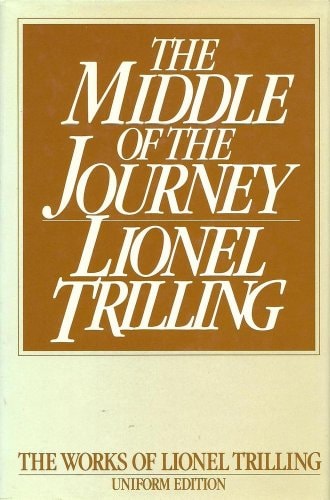
The Middle of the Journey
0
0
As an Amazon Associate and affiliate partner, Menrva Books earns from qualifying purchases. Learn more
Author Description
Published in 1947, as the cold war was heating up, Lionel Trilling’s only novel was a prophetic reckoning with the bitter ideological disputes that were to come to a head in the McCarthy era. The Middle of the Journey revolves around a political turncoat and the anger his action awakens among a group of intellectuals summering in Connecticut. The story, however, is less concerned with the rights and wrongs of left and right than with an absence of integrity at the very heart of the debate. Certainly the hero, John Laskell, staging a slow recovery from the death of his lover and a near-fatal illness of his own, comes to suspect that the conflicts and commitments involved are little more than a distraction from the real responsibilities, and terrors, of the common world.A detailed, sometimes slyly humorous, picture of the manners and mores of the intelligentsia, as well as a work of surprising tenderness and ultimately tragic import, The Middle of the Journey is a novel of ideas whose quiet resonance has only grown with time. This is a deeply troubling examination of America by one of its greatest critics.
Menrva's Summary
THE PULSE
John Laskell, a man recovering from a near-fatal illness and the loss of his lover, finds himself caught in the center of a volatile ideological conflict among his intellectual peers. As Laskell attempts to navigate his own convalescence in the quiet of Connecticut, he becomes an observer to the mounting tensions sparked by a friend's political defection. The narrative, presented through a measured and introspective lens, forces Laskell to confront the moral posturing of his circle. He must weigh the validity of these rigid political commitments against the stark, personal reality of his own mortality and the demands of the common world.
INSIDE THE PAGES
- Examination of mid-century American intellectual culture
- Exploration of the conflict between idealism and personal integrity
- Detailed character studies of political ideologues
- Atmospheric setting in rural Connecticut
- Focus on the psychological recovery of the protagonist
- Use of political defection as a catalyst for social friction
- Philosophical inquiry into the nature of moral responsibility
- Subtle, observational prose style
THE COLLECTIVE ECHO
Discussion often centers on the novel's prescient analysis of political polarization and the moral failings of the mid-century intelligentsia. Readers frequently highlight the contrast between the protagonist's quiet, internal struggle with death and the loud, performative debates of his companions. Critics often note the book's effectiveness in capturing the specific manners and social codes of the era's intellectual elite. The narrative is widely regarded for its refusal to offer easy answers, instead focusing on the complexities of individual integrity in a fractured society. Many readers find the work's quiet, steady pacing to be a deliberate choice that mirrors the protagonist's own slow path toward clarity.
Page Count:
368
Publication Date:
1981-01-01
Publisher:
Oxford/
ISBN-10:
0192122266
ISBN-13:
9780192122261
Literary Fiction
Fiction
Political fiction
classic
Intellectual Fiction