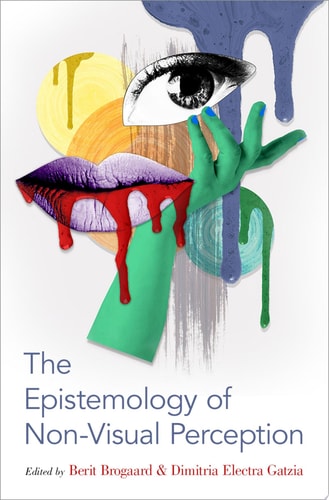
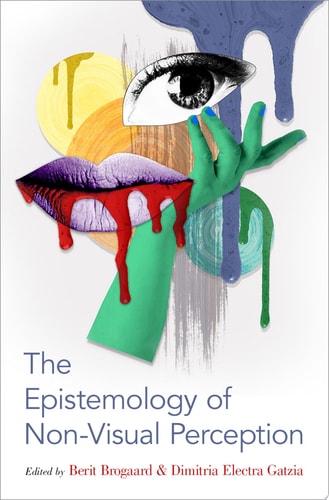
The Epistemology of Non-Visual Perception
0
0
As an Amazon Associate and affiliate partner, Menrva Books earns from qualifying purchases. Learn more
Author Description
Most of the research on the epistemology of perception has focused on visual perception. This is hardly surprising given that most of our knowledge about the world is largely attributable to our visual experiences. The present volume is the first to instead focus on the epistemology of non-visual perception - hearing, touch, taste, and cross-sensory experiences. Drawing on recent empirical studies of emotion, perception, and decision-making, it breaks new ground on discussions of whether or not perceptual experience can yield justified beliefs and how to characterize those beliefs.The Epistemology of Non-Visual Perception explores questions not only related to traditional sensory perception, but also to proprioceptive, interoceptive, multisensory, and event perception, expanding traditional notions of the influence that conscious non-visual experience has on human behavior and rationality. Contributors investigate the role that emotions play in decision-making and agential perception and what this means for justifications of belief and knowledge. They analyze the notion that some sensory experiences, like touch, have epistemic privilege over others, as well as perception's relationship to introspection, and the relationship between action perception and belief. Other essays engage with topics in aesthetics and the philosophy of art, exploring the role that artworks can play in providing us with perceptional knowledge of emotions. The essays collected here, written by top researchers in their respective fields, offer perspectives from a wide range of philosophical disciplines and will appeal to scholars interested in philosophy of mind, epistemology, philosophical psychology, among others.
Menrva's Summary
THE THESIS
This volume investigates the epistemological status of non-visual sensory experiences and their capacity to generate justified beliefs about the world. Berit Brogaard and Dimitria Electra Gatzia assemble a collection of essays that challenge the traditional visual-centric bias in philosophy. By integrating empirical data from psychology and neuroscience, the contributors construct a framework for understanding how hearing, touch, taste, and proprioception function as legitimate sources of knowledge and rational belief.
THE SCOPE MAP
What You Will Find
- Analysis of proprioceptive, interoceptive, and multisensory perception.
- Investigations into the role of emotions in decision-making and agential perception.
- Philosophical inquiries into the epistemic privilege of specific sensory modalities.
- Explorations of aesthetics and the role of art in providing emotional knowledge.
Scope Limits
- The text does not provide a comprehensive history of visual epistemology.
- It does not offer a practical guide for sensory training or clinical therapy.
THE AUTHORITY PERSPECTIVE
Experts identify this collection as a significant contribution to the philosophy of mind, specifically for its focus on neglected sensory modalities. Readers frequently note the academic density of the prose, which is tailored for scholars and advanced students in epistemology and cognitive science.
Page Count:
294
Publication Date:
2020-01-01
Publisher:
Oxford University Press
ISBN-10:
0190648937
ISBN-13:
9780190648930
Philosophy
Psychology
Epistemology
Mind & Body
Academic
Philosophy of
Community Tags
Other Editions(2)
Similar Books