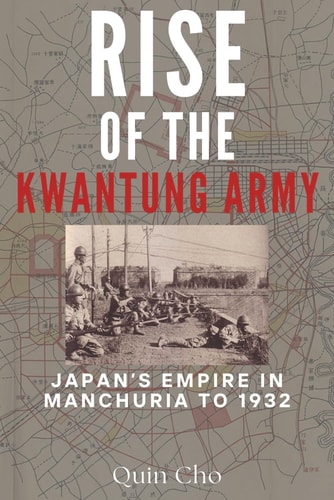
Rise of the Kwantung Army: Japan’s Empire in Manchuria to 1932
0
0
As an Amazon Associate and affiliate partner, Menrva Books earns from qualifying purchases. Learn more
Author Description
Ten years before Japan attacked the United States at Pearl Harbor, a powerful and increasingly autonomous military force had already put Japan down the war path: the Kwantung Army. Drawing from both primary and secondary sources, The Rise of the Kwantung Army: Japan’s Empire in Manchuria to 1932 provides essential insights into the motivations, strategies, and often rogue actions that propelled Japan down its disastrous path toward Pearl Harbor. This work is not just a military history; it is a vital exploration of imperial expansion, the seductive nature of power, and the chilling consequences of an extremist military untethered from civilian control, all of which led to the ultimate demise of the Japanese Empire in 1945. Imperial overreach and extremist influence over foreign policy remain relevant themes in the present era, given the nature of contemporary global events. This compelling narrative delves deep into the Kwantung Army's origins, its consolidation of power, and its profound impact on both Japan and the broader region, with sections on: The Genesis of Power: traces the Kwantung Army's evolution from its post-Russo-Japanese War inception, exploring its initial mandate and the strategic importance of the South Manchuria Railway. The South Manchuria Railway: describes the economic engine and strategic lifeline that became the Kwantung Army's de facto domain, blurring the lines between military might and industrial power. A State Within a State: explains how the Kwantung Army—with its unique blend of military might, economic control, and political influence—gradually asserted its independence from Tokyo, often dictating Japan's foreign policy in Manchuria. The Architects of Empire: identifies the ambitious and often radical officers who envisioned and executed Japan's continental expansion, driven by a potent mix of ultranationalism, anti-communism, resource hunger, and the desire to prepare for a total war. The Seeds of Conflict: analyzes the escalati
Menrva's Summary
THE THESIS
The Kwantung Army's unchecked ambition and autonomy set Japan on a collision course with global conflict. This work investigates the motivations, strategies, and independent actions of the Kwantung Army, a powerful military force that significantly influenced Japan's path toward war. The book explores the complex interplay between military might, economic control, and political maneuvering as the Kwantung Army evolved into a state within a state, often dictating foreign policy in Manchuria. It identifies the key officers driven by ultranationalism and resource acquisition who spearheaded Japan's continental expansion, ultimately leading to the empire's downfall.
THE SCOPE MAP
- Traces the Kwantung Army's evolution from its post-Russo-Japanese War inception and initial mandate.
- Examines the strategic importance and economic role of the South Manchuria Railway.
- Details how the Kwantung Army achieved independence from Tokyo, influencing foreign policy.
- Identifies key officers and their ultranationalist, anti-communist, and resource-driven motivations.
- Analyzes the escalation of conflict stemming from the army's actions.
- Explores the broader themes of imperial expansion, the nature of power, and the consequences of military autonomy.
- Discusses the relevance of these historical themes to contemporary global events.
THE AUTHORITY PERSPECTIVE
The book is presented as an essential exploration of Japan's imperial expansion in Manchuria, focusing on the Kwantung Army's rise to power. It aims to provide insights into the motivations and strategies that led Japan toward war, highlighting themes of imperial overreach and the dangers of unchecked military influence. The narrative delves into the army's origins, consolidation of power, and its impact on Japan and the region. The description suggests a comprehensive historical account with relevance to current geopolitical discussions.
Page Count:
492
Publication Date:
2025-09-05
Publisher:
Pacific Atrocities Education
ISBN-10:
1947766716
ISBN-13:
9781947766716
History
Non-Fiction
Asian History
Imperialism
Military History
Community Tags
Similar Books