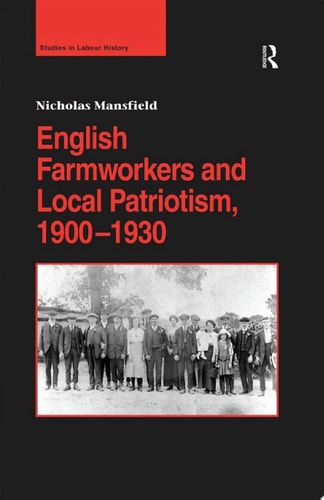
English Farmworkers and Local Patriotism, 1900–1930
0
0
As an Amazon Associate and affiliate partner, Menrva Books earns from qualifying purchases. Learn more
Author Description
This new study looks at the ways in which the years surrounding the First World War shaped the lives of the rural workforce in Britain and how the patriotism unleashed by the war was used by those in power to blur class divisions and build conservative attitudes in rural communities. Using the area of Shropshire and the Marches as a focus, the book looks at farmworkers and their trade unions, the structures of agrarian economy, class divisions, local loyalties, cultural institutions and political organisations. From 1917 the growing power of the farmworkers’ unions and the rural labour movement mounted a challenge to the landed elites and sought a radical change from rural poverty. The author shows how the elites met this threat dynamically by creating a range of new village institutions, such as ploughing matches, Women’s Institutes, village halls, war memorials and the British Legion. The extraordinary growth of rural radicalism at the end of the war was diffused by popular conservatism and local patriotism. Influenced by wartime experiences, the period 1900-1930 saw a change in rural society from parochial concerns to a new sense of loyalty to county and to the English nation.
Menrva's Summary
THE THESIS
This study investigates how the period surrounding World War I reshaped the lives of Britain's rural workforce and how wartime patriotism was manipulated to suppress class divisions and foster conservative attitudes in rural communities. The book focuses on Shropshire and the Marches, examining farmworkers, their unions, the agrarian economy, class structures, local loyalties, cultural institutions, and political organizations. It details the challenge posed by growing farmworker unions and the rural labor movement to landed elites from 1917 onwards, seeking an end to rural poverty. The author demonstrates how elites countered this threat by establishing new village institutions, ultimately diffusing rural radicalism through popular conservatism and local patriotism, shifting rural society from parochial concerns to a broader loyalty to county and nation.
THE SCOPE MAP
- Analysis of the impact of World War I on the British rural workforce.
- Exploration of how patriotism was used by elites to shape conservative attitudes.
- Case study focusing on Shropshire and the Marches.
- Examination of farmworkers and their trade unions.
- Investigation into the structures of the agrarian economy and class divisions.
- Analysis of local loyalties, cultural institutions, and political organizations.
- Discussion of the rise of rural radicalism and the response of landed elites.
- Tracing the shift in rural society from parochial concerns to national loyalty.
THE AUTHORITY PERSPECTIVE
The book examines the complex interplay between local loyalties and national identity in rural Britain during a period of significant social and political upheaval. It highlights the strategies employed by elites to manage the challenges posed by a growing rural labor movement and the diffusion of radicalism. The study's focus on specific institutions and movements provides a detailed look at the transformation of rural society. The narrative suggests a nuanced understanding of how wartime experiences contributed to a broader sense of English national identity among the rural population.
Page Count:
256
Publication Date:
2017-03-02
Publisher:
Taylor & Francis
ISBN-10:
1351940066
ISBN-13:
9781351940061
Non-Fiction
History
Rural Studies
Social History
Labor history
British History
Community Tags
Similar Books