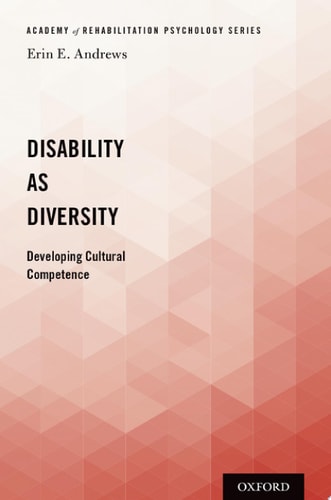
Disability As Diversity: Developing Cultural Competence
0
0
As an Amazon Associate and affiliate partner, Menrva Books earns from qualifying purchases. Learn more
Author Description
Disability As Diversity: Developing Cultural Competence Reveals Why Disability Is A Cultural Experience, Rather Than Merely A Medical Status. Conceptual Models Of Disability Have Evolved Into A Complex Biopsychosocial Phenomenon That Disability Service Providers Must Understand To Fully Appreciate The Intricacy Of The Lives Of The People They Serve. In This Volume, Andrews Sets The Stage With The Must-know History Of Disability Rights And The Social And Cultural Evolution Of Disabled People In The United States. She Presents Important Concepts About Attitudes Toward Disability And The Impact Of Ableism. Andrews Illustrates That Not Only Are Negative Attitudes Harmful, But That Overly Positive Stereotypes Can Have An Equally Detrimental Effect On Disabled People. The Reader Will Learn About Disability Microaggressions And How Attempts To Improve Disability Awareness Can Be Misguided. Andrews Argues That There Is A Distinct Disability Culture, And Introduces The Reader To Its Characteristics And Features. She Explores The Concept Of Disability Identity Development, And How Some People With Disabilities Identify Readily As Disabled And Embrace The Disability Community, While Others Do Not View Themselves As Disabled Even Though They Meet Commonly Accepted Criteria For Disability. Andrews Delves Into The Intricacies And Controversies Of Disability Language, Including Person-first And Identity-first Language. The Reader Will Gain Enhanced Knowledge And Skills To Provide Culturally Competent Care To Individuals, As Well As Methods To Enrich Cultural Humility At The Organizational Level. Andrews Offers Readers A Guide To Disability-related Considerations For Psychological Testing And Assessment And The Role Of Universal Design. Readers Will Learn About Specific Considerations For Intervention With Children And Adults With Disabilities, Including How To Tailor Intervention Approaches, Clinician Attitudes, And The Use Of Evidence Based Treatments.
Menrva's Summary
THE THESIS
This book investigates the necessity of shifting the perception of disability from a strictly medical status to a multifaceted cultural experience. Author Erin E. Andrews, a clinical psychologist, utilizes a biopsychosocial framework to argue that service providers must cultivate cultural competence to effectively support disabled individuals. By examining the history of disability rights and the pervasive impact of ableism, the text provides a structured approach for professionals to improve their clinical practice and organizational inclusivity.
THE SCOPE MAP
What You Will Find
- Historical overview of disability rights and social evolution in the United States
- Analysis of disability identity development and cultural characteristics
- Frameworks for addressing microaggressions and navigating language preferences
- Practical considerations for psychological testing, assessment, and universal design
- Strategies for tailoring evidence-based interventions for children and adults
Scope Limits
- The text focuses primarily on the clinical and service-provider perspective rather than a personal memoir or general sociological critique
- It does not provide an exhaustive global history of disability, focusing instead on the United States context
THE AUTHORITY PERSPECTIVE
Professionals in psychology and social services frequently cite this work as a foundational resource for developing cultural humility in clinical settings. Experts highlight the text for its ability to bridge the gap between theoretical models of disability and practical, day-to-day application for practitioners.
Page Count:
208
Publication Date:
2019-01-01
Publisher:
Oxford University Press
ISBN-10:
0190652322
ISBN-13:
9780190652326
Psychology
Professional Development
Social Science
Sociology
Community Tags
Other Editions(2)
Similar Books


Reader Comments
Share Your Thoughts
No comments yet. Be the first to share your thoughts!