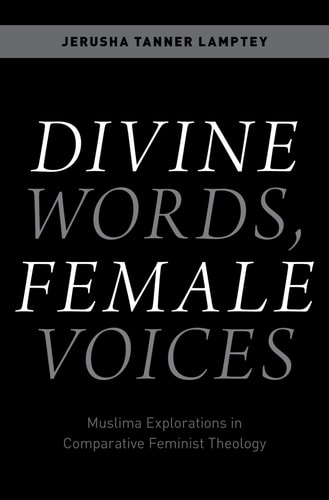
Divine Words, Female Voices: Muslima Explorations in Comparative Feminist Theology
0
0
As an Amazon Associate and affiliate partner, Menrva Books earns from qualifying purchases. Learn more
Author Description
The relationship between Islam and feminism is complex. There are many Muslim scholars who fervently promote women's equality. At the same time, there is ambivalence regarding the general norms, terminology, and approaches of feminism and feminist theology. This ambivalence is in large part a product of various hegemonic, androcentric, and patriarchal discourses that seek to dictate legitimate and authoritative interpretations. These discourses not only fuel ambivalence, they also effectively obscure valuable possibilities related to interreligious feminist engagement.Divine Words, Female Voices is the follow-up to Jerusha Lamptey's 2014 book, Never Wholly Other, in which she introduced the idea of "Muslima" theology and applied it to the topic of religious diversity. In this new book, she extends her earlier arguments to contend that interreligious feminist engagement is both a theologically valid endeavor and a vital resource for Muslim women scholars. She introduces comparative feminist theology as a method for overcoming challenges associated with interreligious feminist engagement, reorients comparative discussions to focus on the two "Divine Words" (the Qur'an and Jesus) and feminist theology, and uses this reorientation to examine intersections, discontinuities, and insights related to diverse theological topics. This book is distinctive in its responsiveness to calls for new approaches in Islamic feminist theology, its use of the method of comparative theology, its focus on Muslim and Christian feminist theology in comparative analysis, and its constructive articulation of Muslima theological perspectives.
Menrva's Summary
THE THESIS
How can comparative feminist theology serve as a constructive framework for Muslim women scholars to navigate the tensions between Islamic tradition and interreligious engagement? Jerusha Tanner Lamptey, a scholar of Islamic studies and theology, utilizes her expertise in comparative theology to address the ambivalence surrounding feminist discourse within Muslim communities. She argues that by reorienting theological inquiry toward the 'Divine Words'—the Qur'an and Jesus—scholars can transcend patriarchal constraints and foster meaningful interreligious dialogue.
THE SCOPE MAP
What You Will Find
- A comparative analysis of Muslim and Christian feminist theological perspectives
- The application of 'Muslima' theology to contemporary religious diversity
- Methodological tools for interreligious feminist engagement
- Examination of intersections and discontinuities between Islamic and Christian theological texts
Scope Limits
- The text does not provide a comprehensive history of global feminist movements
- It does not offer a singular, prescriptive solution for all Islamic feminist debates
THE AUTHORITY PERSPECTIVE
Scholars in the field of comparative theology identify this work as a significant contribution to the development of Muslima theological methodology. Readers frequently note the academic density of the prose, which is intended for advanced students and researchers in religious studies.
Page Count:
312
Publication Date:
2018-10-15
Publisher:
Oxford University Press
ISBN-10:
019065337X
ISBN-13:
9780190653378
Religion
Women in Islam
Feminist Theology
Theology doctrinal
Christian Theology
Islamic Studies
Gender Studies
The Bible
Quran
Bible
Comparative Theology
Community Tags
Similar Books