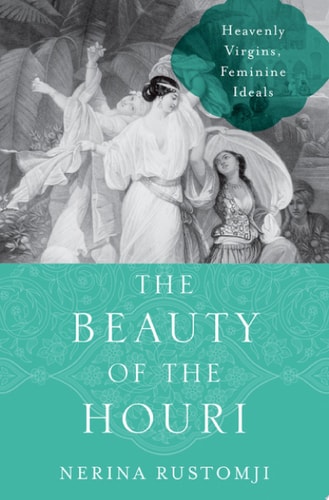
The Beauty of the Houri: Heavenly Virgins, Feminine Ideals
0
0
As an Amazon Associate and affiliate partner, Menrva Books earns from qualifying purchases. Learn more
Author Description
A captivating look at the history of the pure females of Islamic paradise known as the houri The fascination with the houri, the pure female of Islamic paradise, began long before September 11, 2001. Beauty of the Houri: Heavenly Virgins, Feminine Ideals demonstrates how the ambiguous reward of the houri, mentioned in the Qurʾan and developed in Islamic theological writings, has gained a distinctive place in the cultural eye from the seventeenth to the twenty-first century. The houri had multiple functions in Islamic texts that ranged from caretaker, to pure companion, to personal entertainment. French, English, and American writers used the houri to critique Islam and Muslim societies, while also adopting the houri as a model of feminine beauty. Unlike earlier texts that presented different forms of the houri or universalized the houri for all women, writings about the houri after September 11th offer contradictory messages about Islam. In the twenty-first century, the image of the houri has come to symbolize a reward for violence and the possibility of gender parity. As a cosmic figure that inspires enduring questions about the promise of paradise and the idealized feminine form, the houri has a singular past and broad potential for future interpretation. The Beauty of the Houri narrates an intellectual history of the houri and offers a contemporary account of how theological ambiguity has led to different interpretations of this powerfully enduring Islamic concept.
Menrva's Summary
THE THESIS
This work investigates how the concept of the houri—the celestial female figure in Islamic paradise—has evolved from a theological ambiguity into a multifaceted cultural symbol. Author Nerina Rustomji, a scholar of Islamic history, utilizes a wide array of theological texts, literary accounts, and historical records to trace the shifting perceptions of this figure. She argues that the houri has functioned simultaneously as a religious ideal, a tool for Western critique of Muslim societies, and a modern symbol of both violence and gender parity.
THE SCOPE MAP
What You Will Find
- Intellectual history of the houri from the seventeenth to the twenty-first century
- Analysis of Qurʾanic references and subsequent theological interpretations
- Examination of how French, English, and American writers appropriated the houri as a model of feminine beauty
- Comparative study of pre- and post-9/11 interpretations of Islamic paradise
Scope Limits
- The text does not provide a definitive theological consensus on the nature of the houri
- It does not focus on contemporary lived religious practices outside of literary and cultural discourse
THE AUTHORITY PERSPECTIVE
Scholars and critics recognize this text as a significant contribution to the study of gender and orientalism in Islamic discourse. Readers frequently note the academic rigor of the prose, which provides a nuanced look at how theological concepts are reinterpreted through shifting political and cultural lenses.
Page Count:
246
Publication Date:
2021-01-01
Publisher:
Oxford University Press
ISBN-10:
0190249366
ISBN-13:
9780190249366
Philosophy
History
Religion
Cultural History
Gender Studies
Theology
Islamic eschatology
Special Topics
Islamic Studies
Paradise
Community Tags
Similar Books