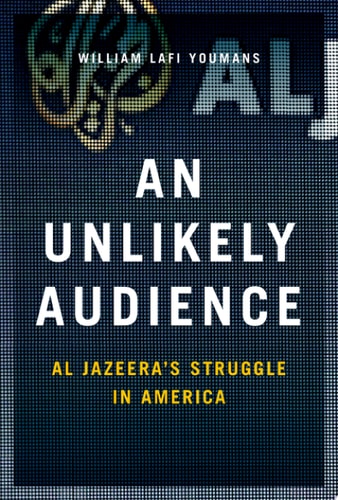
An Unlikely Audience: Al Jazeera's Struggle in America
0
0
As an Amazon Associate and affiliate partner, Menrva Books earns from qualifying purchases. Learn more
Author Description
In 2006, the Al Jazeera Media Network sought to penetrate the United States media sphere, the world's most influential national market for English language news. These unyielding ambitions surprised those who knew the network as the Arab media service President Bush lambasted as "hateful propaganda" in his 2004 State of the Union address. The world watched skeptically yet curiously as Al Jazeera labored to establish a presence in the famously insular American market. The network's decade-long struggle included both fleeting successes, like the sudden surge of popular interest during the Arab spring, as well as momentous failures. The April 2016 closure of its $2 billion Al Jazeera America channel was just one of a series of setbacks. An Unlikely Audience investigates the inner workings of a complex news organization fighting to overcome deep obstacles, foster strategic alliances and build its identity in a country notoriously disinterested in international news. William Youmans argues counter-intuitively that making sense of Al Jazeera's tortured push into the United States as a national news market, actually requires a local lens. He reveals the network's appeal to American audiences by presenting its three independent US-facing subsidiaries in their primary locales of production: Al Jazeera English (AJE) in Washington, DC, Al Jazeera America (AJAM) in New York, and AJ+ in San Francisco. These cities are centers of vital industries-media-politics, commercial TV news and technology, respectively. As Youmans shows, the success of the outlets hinged on the locations in which they operated because Al Jazeera assimilated aspects of their core industries. An Unlikely Audience proves that place is critical to the formation and evolution of multi-national media organizations, despite the rise of communication technologies that many believe make location less relevant. Mining data from over 50 interviews since 2010, internal documents, and original surveys, the book offers
Menrva's Summary
THE THESIS
How does the physical location of a global media organization influence its ability to penetrate and adapt to the American news market? William Youmans, a scholar of media and international affairs, utilizes a decade of research to argue that Al Jazeera's success or failure in the United States was fundamentally tied to the specific industrial and cultural environments of the cities where its subsidiaries were based. By examining the network through a local lens, the author demonstrates that geography remains a decisive factor in the evolution of multinational media despite the perceived borderless nature of digital communication.
THE SCOPE MAP
What You Will Find
- Comparative analysis of three distinct US-facing subsidiaries: Al Jazeera English, Al Jazeera America, and AJ+.
- Examination of the media-politics nexus in Washington, DC, commercial television in New York, and technology sectors in San Francisco.
- Empirical data derived from over 50 interviews, internal corporate documents, and original surveys conducted since 2010.
Scope Limits
- The study focuses primarily on the organizational and industrial challenges of the network rather than a comprehensive critique of its editorial content or geopolitical bias.
THE AUTHORITY PERSPECTIVE
Experts in media studies recognize this work as a significant contribution to understanding the intersection of globalization and local industrial constraints. Readers frequently note the academic rigor of the text, highlighting its value for those interested in the structural mechanics of international news organizations operating within the United States.
Page Count:
255
Publication Date:
2017-01-01
Publisher:
Oxford University Press
ISBN-10:
0190655747
ISBN-13:
9780190655747
Communications
Communication
Sociology
Media Studies
Introduction to Human Communication
Mass Communication
Journalism
International relations
Community Tags
Similar Books