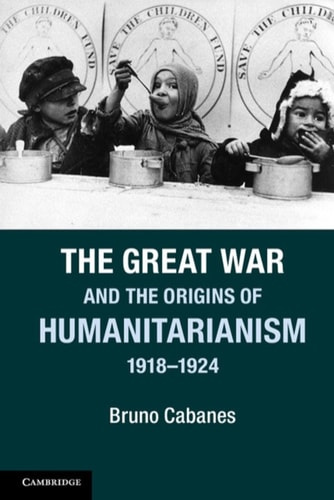
The Great War and the Origins of Humanitarianism, 1918–1924
0
0
As an Amazon Associate and affiliate partner, Menrva Books earns from qualifying purchases. Learn more
Author Description
The aftermath of the Great War brought the most troubled peacetime the world had ever seen. Survivors of the war were not only the soldiers who fought, the wounded in mind and body. They were also the stateless, the children who suffered war's consequences, and later the victims of the great Russian famine of 1921 to 1923. Before the phrases 'universal human rights' and 'non-governmental organization' even existed, five remarkable men and women - René Cassin and Albert Thomas from France, Fridtjof Nansen from Norway, Herbert Hoover from the US and Eglantyne Jebb from Britain - understood that a new type of transnational organization was needed to face problems that respected no national boundaries or rivalries. Bruno Cabanes, a pioneer in the study of the aftermath of war, shows, through his vivid and revelatory history of individuals, organizations, and nations in crisis, how and when the right to human dignity first became inalienable.
Menrva's Summary
THE THESIS
The Great War's devastating aftermath necessitated the creation of new forms of transnational humanitarian aid and the conceptualization of human dignity as an inalienable right. The period between 1918 and 1924 witnessed unprecedented peacetime suffering, encompassing not only soldiers but also stateless populations, war-affected children, and victims of widespread famine. In this context, five key figures—René Cassin, Albert Thomas, Fridtjof Nansen, Herbert Hoover, and Eglantyne Jebb—emerged as pioneers, recognizing the need for organizations that could transcend national borders to address these global crises. Bruno Cabanes meticulously details the efforts of these individuals, their organizations, and the nations involved, illustrating the nascent development of humanitarianism and the evolving understanding of human rights.
THE SCOPE MAP
- An examination of the immediate post-World War I period, characterized by widespread humanitarian crises.
- Biographical insights into key figures like René Cassin, Albert Thomas, Fridtjof Nansen, Herbert Hoover, and Eglantyne Jebb.
- Analysis of the challenges faced by stateless individuals, war-affected children, and famine victims.
- Exploration of the emergence of transnational organizations dedicated to humanitarian aid.
- The historical development of concepts related to universal human rights and human dignity.
- Case studies of international responses to crises such as the Russian famine of 1921-1923.
- The evolution of non-governmental organizations in addressing global issues.
THE AUTHORITY PERSPECTIVE
Bruno Cabanes's work is recognized for its pioneering study of the war's aftermath, offering a vivid and revelatory history of individuals, organizations, and nations grappling with crisis. The book is lauded for its detailed exploration of how and when the concept of human dignity began to be understood as inalienable, particularly in the turbulent years following the Great War. It highlights the crucial role of specific individuals and emerging transnational organizations in addressing problems that transcended national boundaries. The narrative effectively traces the origins of modern humanitarianism and the foundational ideas that would later inform universal human rights.
Page Count:
396
Publication Date:
2014-03-13
Publisher:
Cambridge University Press
ISBN-10:
1139698753
ISBN-13:
9781139698757
History
Non-Fiction
International relations
Human rights
Community Tags
Similar Books