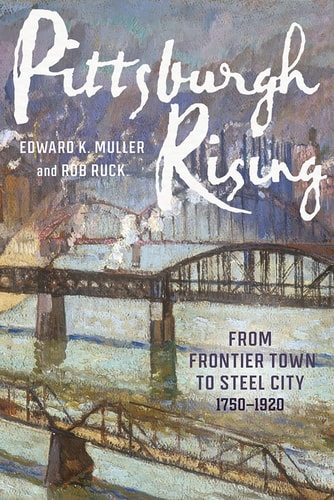
Pittsburgh Rising: From Frontier Town to Steel City, 1750-1920
0
0
As an Amazon Associate and affiliate partner, Menrva Books earns from qualifying purchases. Learn more
Author Description
Over 170 years, Pittsburgh rose from remote outpost to industrial powerhouse. With the formation of the United States, the frontier town located at the confluence of three rivers grew into the linchpin for trade and migration between established eastern cities and the growing settlements of the Ohio Valley. Resources, geography, innovation, and personalities led to successful glass, iron, and eventually steel operations. As Pittsburgh blossomed into one of the largest cities in the country and became a center of industry, it generated great wealth for industrial and banking leaders. But immigrants and African American migrants, who labored under insecure, poorly paid, and dangerous conditions, did not share in the rewards of growth. Pittsburgh Rising traces the lives of individuals and families who lived and worked in this early industrial city, jammed into unhealthy housing in overcrowded neighborhoods near the mills. Although workers organized labor unions to improve conditions and charitable groups and reform organizations, often helmed by women, mitigated some of the deplorable conditions, authors Muller and Ruck show that divides along class, religious, ethnic, and racial lines weakened the efforts to improve the inequalities of early twentieth-century Pittsburgh—and persist today.
Menrva's Summary
THE THESIS
Pittsburgh transformed from a remote frontier outpost into a global industrial powerhouse over 170 years. The city's strategic location at the confluence of three rivers facilitated its growth as a linchpin for trade and migration. Driven by resources, geography, innovation, and key personalities, Pittsburgh became a center for glass, iron, and eventually steel production, generating immense wealth for its industrial and banking leaders. However, the immigrants and African American migrants who fueled this growth endured dangerous, poorly paid labor and lived in overcrowded, unhealthy conditions, highlighting the stark inequalities of the era.
THE SCOPE MAP
- The historical development of Pittsburgh from 1750 to 1920, detailing its rise from a frontier town to an industrial metropolis.
- Analysis of the key industries that shaped Pittsburgh, including glass, iron, and steel, and their impact on the city's economy.
- Exploration of the roles of geography, innovation, and influential figures in Pittsburgh's industrial expansion.
- Examination of the experiences of immigrants and African American migrants, focusing on their labor conditions and living situations.
- Discussion of the formation and impact of labor unions, charitable organizations, and reform movements, particularly those led by women.
- An analysis of the persistent social divides along class, religious, ethnic, and racial lines that affected efforts to address inequality.
THE AUTHORITY PERSPECTIVE
The book meticulously traces Pittsburgh's evolution from a frontier settlement to an industrial titan, detailing the economic forces and key industries that propelled its growth. It critically examines the human cost of this progress, highlighting the difficult lives of immigrant and African American laborers who did not share in the city's generated wealth. The authors underscore how class, religious, ethnic, and racial divisions hampered attempts to achieve greater equality, a theme that resonates into the present day.
Page Count:
330
Publication Date:
2023-05-16
Publisher:
University of Pittsburgh Press
ISBN-10:
0822947722
ISBN-13:
9780822947721
History
Non-Fiction
Urban History
Labor history
Immigration
Social History
Industrial history
Community Tags
Similar Books