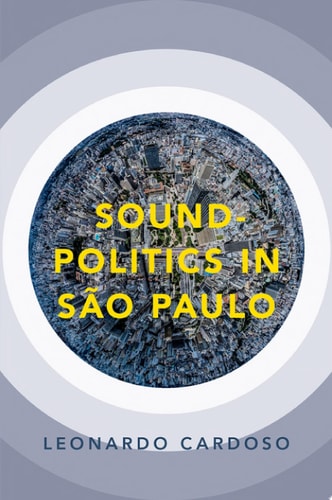
Sound-politics in São Paulo
0
0
As an Amazon Associate and affiliate partner, Menrva Books earns from qualifying purchases. Learn more
Author Description
How Does The State Separate Music From Noise? How Can Such A Filtering Apparatus Shape The Content And Form Of Sound Production In The City? As A Marker Of Co-presence To The Hearing Body, Sound Is Always Open To (or Rather Opens Up) The Politics Of Shared Existence. In The Throes Of The Post-dictatorship Period, Brazil's Legislative And Executive Branches Implemented A Series Of Sweeping Measures To Address Quality Of Life Concerns, Including Environmental Pollution And Urban Inequality. In São Paulo, Noise Control Became A Recurrent Controversy, Growing In Size And Scale Between The 1990s And 2010s. Together With The Much-debated Fear Of Crime And The Socioeconomic And Cultural Tensions Between The Rich Urban Center And The Poor Peripheries, Such Ecological Agendas Against Noise As A Harmful Pollutant Have Reconfigured The Presence Of Environmental Sounds In The City. In This Book, Cardoso Argues That The Framing Of Specific Sounds As Unavoidable, Unnecessary, Or As Harmful Noise Has Been An Effective Strategy To Organize Spaces And Administer Group Behavior In This Rapidly Expanding City. He Focuses On Two Interrelated Processes. First, The Series Of Institutional Regulatory Mechanisms That Turn Sounds Into The All-embracing Noise Susceptible To State Intervention. Second, The Constant Attempts Of Interested Groups In Either Attaching Or Detaching Specific Sounds (musical Events, Industrial Noise, Traffic Noise, Religious Sounds, Etc.) From Regulatory Scrutiny. Sound-politics Is The Dynamic That Emerges From Both Processes - The Channels Through Which Sounds Enter (and Leave) The Sphere Of State Regulation.
Menrva's Summary
THE THESIS
How does the state distinguish between music and noise, and how does this classification function as a mechanism for urban governance and social control? Leonardo Cardoso, an expert in sound studies and urban anthropology, examines the legislative and executive efforts in post-dictatorship São Paulo to regulate environmental sound. He argues that the state's categorization of sound as 'noise' serves as a strategic tool to manage urban spaces, enforce socioeconomic boundaries, and administer group behavior within the city's rapidly expanding landscape.
THE SCOPE MAP
What You Will Find
- Analysis of institutional regulatory mechanisms governing urban soundscapes.
- Case studies on the tension between musical events, industrial noise, and religious sounds.
- Examination of the intersection between noise control, urban inequality, and fear of crime.
Scope Limits
- The study focuses primarily on the period between the 1990s and 2010s in São Paulo.
- The text does not provide a comprehensive global history of noise ordinances outside the Brazilian context.
THE AUTHORITY PERSPECTIVE
Scholars in urban studies and sound ecology recognize this work as a significant contribution to understanding how sensory regulation reflects broader political power dynamics. Readers frequently note the academic rigor of the prose and the clarity with which the author connects local policy to larger sociological theories.
Page Count:
288
Publication Date:
2019-01-01
Publisher:
Oxford University Press
ISBN-10:
0190660112
ISBN-13:
9780190660116
Brazil
Sociology
Musicology
Urban Studies
Community Tags
Other Editions(3)
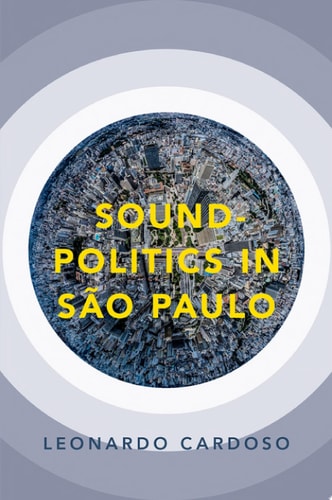
Similar Books





Reader Comments
Share Your Thoughts
No comments yet. Be the first to share your thoughts!