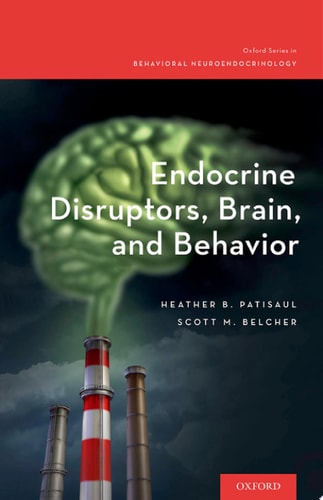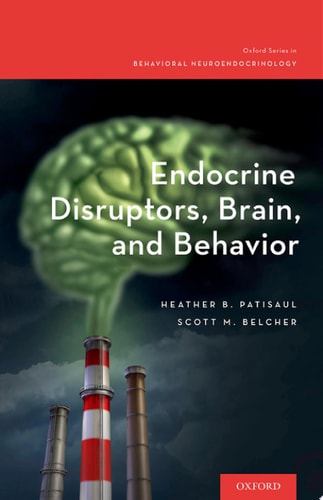
Endocrine Disruptors, Brain, and Behavior
0
0
As an Amazon Associate and affiliate partner, Menrva Books earns from qualifying purchases. Learn more
Author Description
Our world and bodies are becoming increasingly polluted with chemicals capable of interfering with our hormones and thus, possibly, our present and future neural and mental health. As authors Heather Patisaul and Scott Belcher outline, there is a large lack of data and evidence in this causal relationship, which begs a need for further study to accelerate progress in the endocrinology and neuroendocrinology fields.Endocrine Disruptors, Brain, and Behavior focuses on if and how these chemicals, known as endocrine disrupting compounds (EDCs), affect the development and function of the brain and might be contributing to neural disorders rapidly rising in prevalence. The book provides an overall synthesis of the EDC field, including its historical roots, major hypotheses, key findings, and research gaps. The authors explain why even the concept of endocrine disruption is controversial in some circles, how differing definitions of endocrine disruption and what constitutes an "adverse" outcome on the brain shape public policy, and where the current capacity by different stakeholders (industry, academia, regulatory agencies) to evaluate chemicals for safety in a regulatory context begins and ends. The book concludes with suggestions for future research needs and a summary of emerging technology which might prove capable of more effectively evaluating existing and emerging chemicals for endocrine disrupting properties. As such, it provides the context for interdisciplinary and innovative input from a broad spectrum of fields, including those well-schooled in neuroscience, evolutionary biology, brain, behavior, sex differences, and neuroendocrinology.
Menrva's Summary
THE THESIS
This text investigates the causal relationship between environmental endocrine disrupting compounds (EDCs) and their potential impact on neural development, mental health, and behavioral outcomes. Authors Heather B. Patisaul and Scott M. Belcher, both established researchers in the field, synthesize existing literature to address the critical lack of data regarding how these chemicals interfere with hormonal systems. They argue that current regulatory frameworks and scientific definitions are insufficient to fully capture the risks posed by EDCs, necessitating a more rigorous, interdisciplinary approach to chemical safety evaluation.
THE SCOPE MAP
What You Will Find
- Historical development of the endocrine disruption hypothesis
- Analysis of the controversy surrounding EDC definitions and adverse outcome criteria
- Evaluation of current regulatory capacities across industry, academia, and government agencies
- Overview of emerging technologies for chemical safety assessment
Scope Limits
- Does not provide a definitive clinical diagnosis guide for EDC-related disorders
- Does not cover non-chemical environmental stressors on the endocrine system
THE AUTHORITY PERSPECTIVE
Experts and researchers in neuroendocrinology identify this work as a foundational synthesis for understanding the intersection of environmental toxicology and brain function. Readers frequently note the academic density of the prose, which is tailored for professionals and students within the biological and regulatory sciences.
Page Count:
265
Publication Date:
2017-01-01
Publisher:
Oxford University Press
ISBN-10:
0190669039
ISBN-13:
9780190669034
Science
Behavioral Science
Environmental Health
Toxicology
Endocrinology
Neuroscience