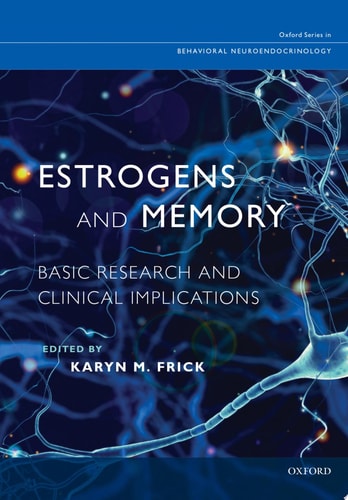
Estrogens and Memory: Basic Research and Clinical Implications
0
0
As an Amazon Associate and affiliate partner, Menrva Books earns from qualifying purchases. Learn more
Author Description
Estrogens are key modulators of brain regions that mediate learning and memory formation. This regulation has significant translational implications, as estrogens contribute to age-related memory decline and dementia, emotional disorders, addiction, and recovery from brain injury. Although the importance of estrogens for memory formation has been well accepted within the behavioral neuroendocrinology community, it has yet to be fully appreciated by neuroscientists outside of the discipline.Recent National Institutes of Health policies on the inclusion of sex as a biological variable in grant applications will force thousands of researchers to consider hormonal regulation of memory for the first time. However, the majority of these researchers are not trained endocrinologists, and no previous monograph comprehensively encompasses the breadth of basic and clinical research on this subject. Thus, this book provides a vital resource for non-endocrinologists and endocrinologists alike.Estrogens and Memory: Basic Research and Clinical Implications provides a compendium of cutting-edge basic and clinical research describing the ways in which estrogens regulate memory in a variety of species. Chapters are written by leading experts whose work is on the forefront of this exciting field. Three fundamental discussions focus on: effects of estrogens on the hippocampus and other brain regions central to memory, effects of estrogens on memory and related cognitive processes throughout the lifespan, and translational implications of estrogenic regulation of memory for aging and disease.
Menrva's Summary
THE THESIS
This book investigates the complex role of estrogens as modulators of brain regions involved in learning and memory, addressing the need for a comprehensive resource on hormonal regulation for both specialists and non-specialists. Karyn M. Frick, a prominent researcher in behavioral neuroendocrinology, compiles contributions from leading experts to bridge the gap between basic laboratory research and clinical applications. The text serves as a foundational guide for scientists navigating new NIH mandates regarding the inclusion of sex as a biological variable in research.
THE SCOPE MAP
What You Will Find
- Analysis of estrogenic effects on the hippocampus and memory-related brain structures
- Longitudinal examination of hormonal influence on cognitive processes across the lifespan
- Translational research connecting estrogen regulation to aging, dementia, and recovery from brain injury
Scope Limits
- The text focuses primarily on neuroendocrinological mechanisms and may not cover broader sociological or non-hormonal aspects of cognitive decline.
THE AUTHORITY PERSPECTIVE
Experts identify this work as a primary resource for researchers who are not trained endocrinologists but must now account for hormonal variables in their studies. The text is noted for its ability to synthesize dense, specialized data into a format that is accessible for the broader neuroscience community.
Page Count:
516
Publication Date:
2020-01-28
Publisher:
Oxford University Press
ISBN-10:
0190645903
ISBN-13:
9780190645908
Physical Anthropology
Endocrinology
Neuroscience
Cognitive Psychology
Estrogen
Medical research
Behavioral Science
Community Tags
Other Editions(2)
Similar Books