The Escape Line
0
0
As an Amazon Associate and affiliate partner, Menrva Books earns from qualifying purchases. Learn more
Author Description
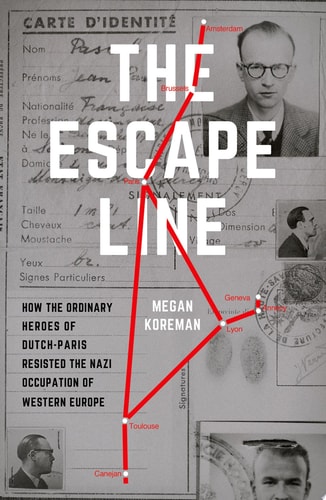
Of All The Resistance Organizations That Operated During The War, About Which Much Has Been Written, One Stands Out For Its Transnational Character, The Diversity Of The Tasks Its Members Took On, And The Fact That, Unlike Many Of The Known Evasion Lines, It Was Not Directed By Allied Officers, But Rather By Group Of Ordinary Citizens. Between 1942 And 1945, They Formed A Network To Smuggle Dutch Jews And Others Targeted By The Nazis South Into France, Via Paris, And Then To Switzerland. This Network Became Known As The Dutch-paris Escape Line, Eventually Growing To Include 300 People And Expanding Its Reach Into Spain. Led By Jean Weidner, A Dutchman Living In France, Many Lacked Any Experience In Clandestine Operations Or Military Tactics, And Yet They Became One Of The Most Effective Resistance Groups Of The Second World War. Dutch-paris Largely Improvised Its Operations-scrounging For Food On The Black Market, Forging Documents, And Raising Cash. Hunted Relentlessly By The Nazis, Some Were Even Captured And Tortured. In Addition To Jews, Those It Helped Escape The Clutches Of The Nazis Included Resistance Fighters, Political Foes, Allied Airmen, And Young Men Looking To Get To London To Enlist. As The Need Grew More Desperate, So Did The Bravery Of Those Who Rose To Meet It. Using Recently Declassified Archives, The Escape Line Tells The Story Of The Dutch-paris And The Thousands Of People It Saved During World War Ii. Author Megan Koreman, Who Was Given Exclusive Access To Many Of The Archives, Is Herself The Daughter Of Dutch Parents Who Were Part Of The Resistance.
Menrva's Summary
THE THESIS
This work investigates the operational mechanics and historical significance of the Dutch-Paris escape line, a grassroots resistance network that functioned independently of Allied military command. Megan Koreman, a historian with personal familial ties to the Dutch resistance, utilizes recently declassified archives to reconstruct the activities of this transnational group. The book argues that the network's success stemmed from the improvisation and diverse skill sets of ordinary citizens rather than formal military training or state-sponsored intelligence direction.
THE SCOPE MAP
What You Will Find
- Detailed account of the Dutch-Paris network operations between 1942 and 1945.
- Analysis of clandestine logistics, including document forgery and black market procurement.
- Examination of the network's expansion from the Netherlands through France to Switzerland and Spain.
Scope Limits
- The text focuses primarily on the Dutch-Paris organization and does not provide a comprehensive history of all European evasion lines.
- It does not offer a broad military analysis of the Allied strategic theater beyond the specific context of the escape route.
THE AUTHORITY PERSPECTIVE
Historians and scholars recognize this work as a significant contribution to the study of civilian resistance during the Second World War. Readers frequently note the meticulous use of primary source archives and the author's ability to balance academic rigor with the personal narratives of the network members.
Page Count:
400
Publication Date:
2018-01-01
Publisher:
Oxford University Press
ISBN-10:
0190662298
ISBN-13:
9780190662295
History
Biography
European History
World War
Military History
Community Tags
Similar Books