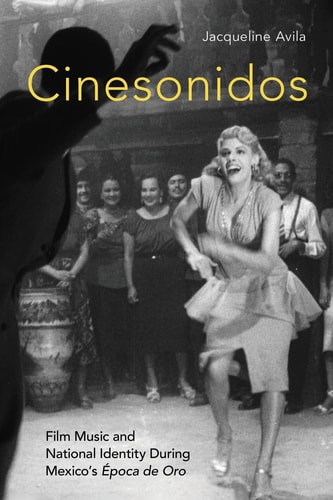
Cinesonidos: Film Music and National Identity During Mexico's Época de Oro
0
0
As an Amazon Associate and affiliate partner, Menrva Books earns from qualifying purchases. Learn more
Author Description
During Mexico's silent (1896-1930) and early sound (1931-52) periods, cinema saw the development of five significant genres: the prostitute melodrama (including the cabaretera subgenre), the indigenista film (on indigenous themes or topics), the cine de añoranza porfiriana (films of Porfirian nostalgia), the Revolution film, and the comedia ranchera (ranch comedy). In this book, author Jacqueline Avila looks at examples from all genres, exploring the ways that the popular, regional, and orchestral music in these films contributed to the creation of tropes and archetypes now central to Mexican cultural nationalism. Integrating primary source material--including newspaper articles, advertisements, films--with film music studies, sound studies, and Mexican film and cultural history, Avila examines how these tropes and archetypes mirrored changing perceptions of mexicanidad manufactured by the State and popular and transnational culture. As she shows, several social and political agencies were heavily invested in creating a unified national identity in an attempt to merge the previously fragmented populace as a result of the Revolution. The commercial medium of film became an important tool to acquaint a diverse urban audience with the nuances of Mexican national identity, and music played an essential and persuasive role in the process. In this heterogeneous environment, cinema and its music continuously reshaped the contested, fluctuating space of Mexican identity, functioning both as a sign and symptom of social and political change.
Menrva's Summary
THE THESIS
This book investigates how film music during Mexico's Golden Age functioned as a primary mechanism for constructing and disseminating a unified sense of national identity. Author Jacqueline Avila, a scholar of musicology and film, utilizes a multidisciplinary framework that combines sound studies, cultural history, and film theory. She argues that the music within five specific cinematic genres served as a persuasive tool for the State and commercial entities to consolidate a fragmented post-Revolutionary populace into a cohesive national consciousness.
THE SCOPE MAP
What You Will Find
- Analysis of five core Mexican film genres: prostitute melodrama, indigenista, cine de añoranza porfiriana, Revolution film, and comedia ranchera.
- Examination of the intersection between popular, regional, and orchestral music styles.
- Integration of primary source materials including period newspaper articles, film advertisements, and the films themselves.
Scope Limits
- The study focuses primarily on the silent and early sound periods from 1896 to 1952.
- The text does not provide an exhaustive history of Mexican cinema, focusing instead on the specific role of music in identity formation.
THE AUTHORITY PERSPECTIVE
Scholars in the fields of film music and Latin American studies identify this work as a significant contribution to the understanding of how soundscapes influence national narratives. Readers frequently note the academic rigor of the prose and the depth of the archival research presented by the author.
Page Count:
288
Publication Date:
2019-01-01
Publisher:
Oxford University Press
ISBN-10:
0190671319
ISBN-13:
9780190671310
Music
American History
Criticism history
Film Studies
Mexican History
Community Tags
Similar Books