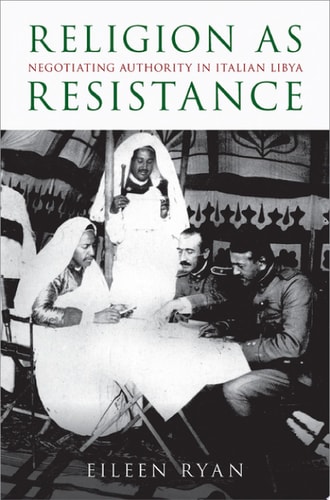
Religion as Resistance
0
0
As an Amazon Associate and affiliate partner, Menrva Books earns from qualifying purchases. Learn more
Author Description
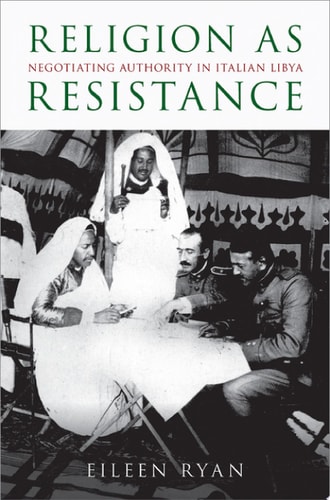
When Italian Forces Landed On The Shores Of Libya In 1911, Many In Italy Hailed It As An Opportunity To Embrace A Catholic National Identity Through Imperial Expansion. After Decades Of Acrimony Between An Intransigent Church And The Italian State, Enthusiasm For The Imperial Adventure Helped Incorporate Catholic Interests In A New Era Of Mass Politics. Others Among Italian Imperialists-military Officers And Civil Administrators-were More Concerned With The Challenges Of Governing A Muslim Society, One In Which The Sufi Brotherhood Of The Sanusiyya Seemed Dominant. Eileen Ryan Illustrates What Italian Imperialists Thought Would Be The Best Methods To Govern In Muslim North Africa And In Turn Highlights The Contentious Connection Between Religious And Political Authority In Italy. Telling This Story Requires An Unraveling Of The History Of The Sanusiyya. During The Fall Of Qaddafi, Libyan Protestors Took Up The Flag Of The Libyan Kingdom Of Idris Al-sanusi, Signaling An Opportunity To Reexamine Libya's Colonial Past. After Decades Of Historiography Discounting The Influence Of Sanusi Elites In Libyan Nationalism, The End Of This Regime Opened Up The Possibility Of Reinterpreting The Importance Of Religion, Resistance, And Sanusi Elites In Libya's Colonial History. Religion As Resistance Provides New Perspectives On The History Of Collaboration Between The Italian State And Idris Al-sanusi And Questions The Dichotomy Between Resistance And Collaboration In The Colonial World.
Menrva's Summary
THE THESIS
This work investigates how the intersection of religious identity and political authority shaped the colonial administration of Libya by the Italian state. Eileen P. Ryan, a scholar of modern European and colonial history, utilizes archival records and historical analysis to challenge traditional narratives regarding the relationship between the Italian government and the Sanusiyya Sufi order. The book argues that the binary opposition between resistance and collaboration in colonial contexts is insufficient to explain the complex political maneuvers of local elites and imperial administrators.
THE SCOPE MAP
What You Will Find
- Analysis of Italian imperial policy in North Africa from 1911 through the mid-20th century.
- Examination of the Sanusiyya Sufi brotherhood's role in Libyan social and political structures.
- Historical documentation regarding the collaboration between the Italian state and Idris al-Sanusi.
Scope Limits
- The text does not provide a comprehensive military history of the Italian-Libyan war.
- It does not focus on post-1969 Libyan political developments beyond their relevance to historical reinterpretation.
THE AUTHORITY PERSPECTIVE
Scholars in the field of colonial studies highlight this text as a significant contribution to the historiography of Italian imperialism and North African resistance movements. Readers frequently note the academic rigor and the nuanced approach the author takes in deconstructing the simplistic dichotomy between colonial subjects and their occupiers.
Page Count:
224
Publication Date:
2018-01-01
Publisher:
Oxford University Press
ISBN-10:
019067380X
ISBN-13:
9780190673802
History
Religion
Middle Eastern
European History
Colonialism
Community Tags
Similar Books